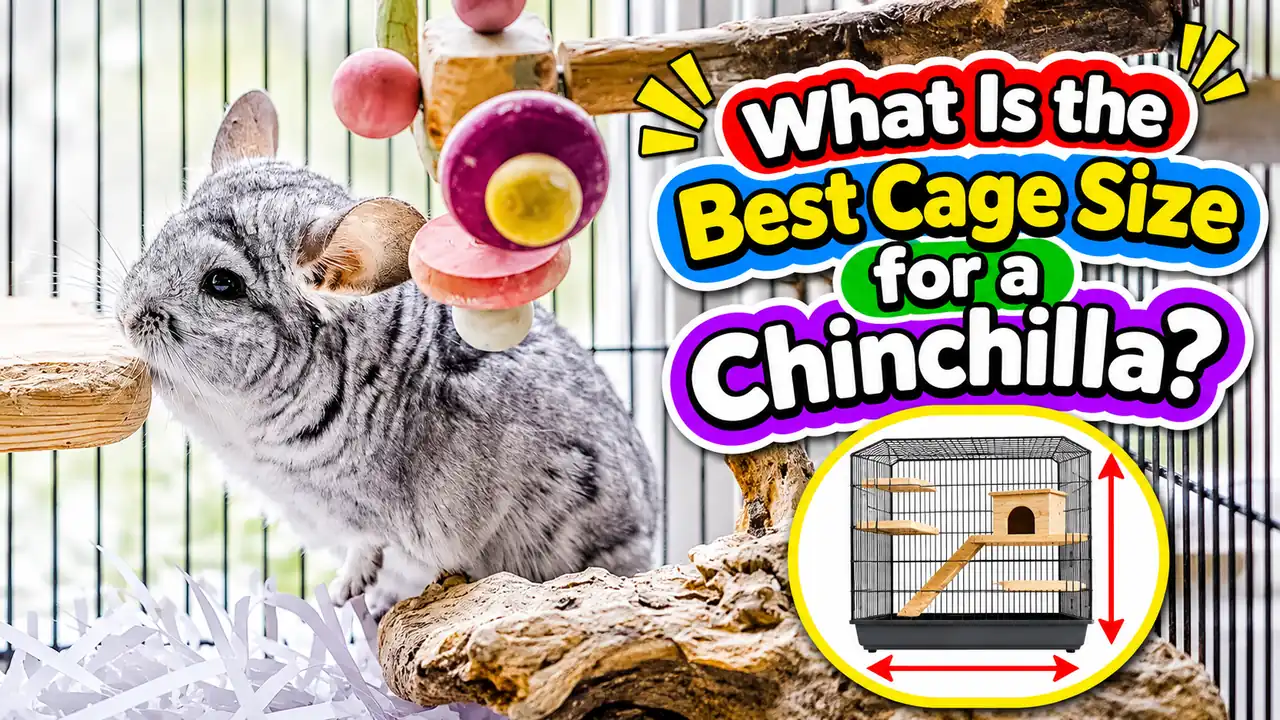
What Is the Best Cage Size for a Chinchilla?
For one chinchilla, aim for a cage of at least 24 x 24 x 48 inches, and treat that as the floor, not the goal. Many experienced owners go for a two-level cage around 36 x 24 x 63 inches, which gives a single chin room to leap and comfortably fits a bonded pair.
Height is the key word with chinchillas. These are vertical athletes, so a tall cage with plenty of ledges beats a wide, low one every time.
Cage Size Cheat Sheet
| Number of Chinchillas | Minimum Size | Better Choice |
|---|---|---|
| One | 24 x 24 x 48 inches | About 36 x 24 x 60+ inches, multi-level |
| A bonded pair | About 36 x 24 x 48 inches | A tall double-level cage, around 36 x 24 x 63 inches |
| Three or more | Larger than a double-level cage | A custom setup or linked units with extra floor space |
Owners and care guides don’t all agree on one exact minimum. The safest approach is simple: buy the biggest tall cage your space and budget allow.
Why Height Matters More Than Floor Space

In the wild, chinchillas bounce between rocks and crevices. That’s why chinchillas jump so high, and a pet cage should let them do the same.
Two cages can have identical floor space, but the taller one with staggered shelves gives a chinchilla far more usable room. More levels mean more places to climb, rest, hide and play.
There’s a balance, though. Stagger the ledges so there’s never a long, straight drop to the floor, since falls from height can break delicate bones.
Bar Spacing: The Detail That Prevents Escapes
Keep bar spacing at 1 inch or less for adult chinchillas. For kits or very small chins, half-inch spacing is safer, since young ones can squeeze their heads through surprisingly small gaps.
Horizontal bars also double as climbing walls. Many chins love scaling the sides of their cage between shelves.
What to Look for in a Good Chinchilla Cage
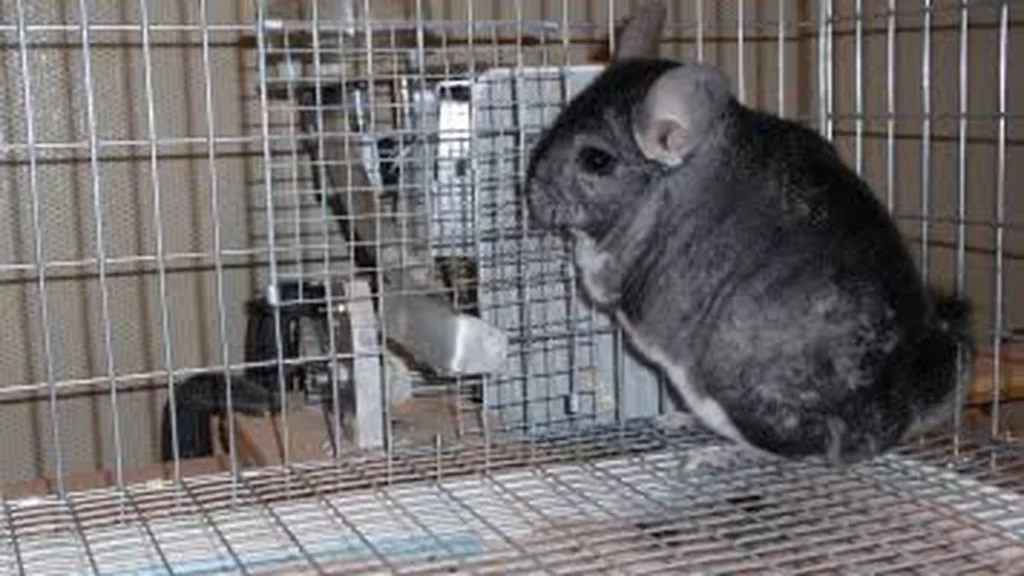
- Metal construction: Powder-coated wire or metal stands up to chewing far better than plastic.
- Solid floors and shelves: Wire floors can cause foot sores, so choose solid pans or cover wire with fitted fleece or wood.
- No plastic inside: Plastic ramps, shelves and hammocks get chewed and swallowed. Swap them for wood.
- Deep pull-out trays: These make daily spot-cleaning and weekly bedding changes much easier.
- Wide doors: Full-width doors let you reach every corner and catch a speedy chin without a struggle.
- Room for accessories: Make sure there’s space for a hideout, hay rack, water bottle, dust bath and, if you use one, a large solid wheel.
A popular choice in owner communities is a tall two-level cage of the Critter Nation style, with half-inch bars and pull-out pans. Whatever brand you pick, check the measurements and bar spacing yourself before you buy.
Setting Up the Inside
A great cage still needs the right layout. Think of it as a small apartment with zones for eating, sleeping and playing.
- Ledges: Wide kiln-dried wood shelves at different heights, staggered for safe hopping.
- Hideouts: At least one wooden house per chinchilla, since they love tucked-away spots and often sleep in strange positions inside them.
- Bedding: Paper bedding or fleece on the floor, deep enough for a chin that likes to dig in corners.
- Hay rack: Mounted where hay stays off the floor and away from droppings.
- Chews: Apple wood sticks and pumice in easy reach, because chinchillas chew everything.
[Add your own note: the cage you use and one layout tip that made a difference for your chinchilla.]
Where to Put the Cage
Place it in a cool, quiet room where the temperature stays around 55°F to 70°F. Keep it out of direct sunlight and away from radiators, heat vents, fireplaces and drafty windows.
A spot where people pass by in the evening works well, since chinchillas enjoy watching household life once they settle in. Bedrooms are usually a poor choice for light sleepers.
Red Flags When Shopping
- Cages labeled for chinchillas that are shorter than about 3 feet
- Wire floors with no solid option
- Bars wider than 1 inch
- Lots of plastic platforms and tubes
- Small doors that make cleaning awkward
- Glass tanks or aquariums, which trap heat and humidity
Cage Mistakes to Avoid
Buying the starter kit cage
Many cages sold in starter kits are designed for smaller pets and are far too short for a natural jumper. Check the real height in inches before you buy.
Crowding the space
A big cage can still feel cramped when it’s packed with toys. Leave clear runways between ledges so your chin can hop freely.
Spacing shelves too far apart
Huge gaps between ledges encourage risky leaps and falls. Keep spacing manageable so every jump has a safe landing spot.
Furnishing the Cage Safely
What goes inside matters as much as the size. Our guides to the best bedding for chinchillas and safe wood to chew cover the materials that belong in the cage.
If you’d like a wheel, make sure there’s room for a 15-inch solid model with space around it. Here’s our full guide on whether chinchillas need an exercise wheel.
Planning for Cleaning and Two Chinchillas
A larger cage takes a little longer to clean, so it helps to have a routine. Our guide on how often to clean a chinchilla cage breaks it into daily, weekly and monthly jobs.
If you’re thinking about a pair, size up from the start. Our guide on whether chinchillas need a companion explains pairings and introductions.
Final Thought
A chinchilla spends most of its life in its cage, so this is one purchase worth stretching for. Go tall, go metal, skip the plastic, and you’ll have a home your chin can enjoy for years.