How Much Should a Chinchilla Weight? Healthy Weight Ranges and Checks
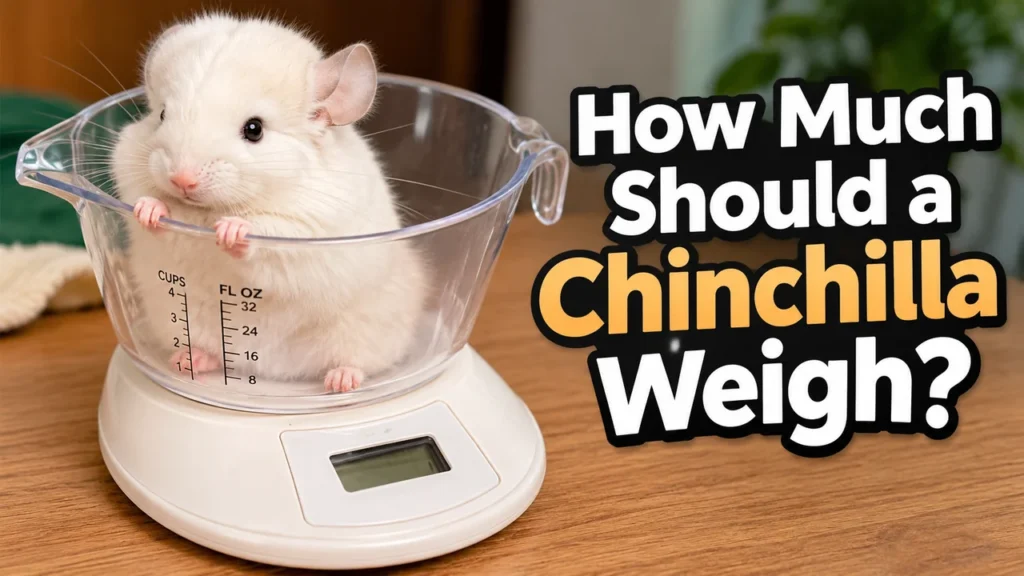
A healthy adult chinchilla usually weighs between 400 and 700 grams, or roughly 1 to 1.5 pounds. Females tend to sit at the heavier end and can reach about 800 grams, while males are often a little lighter.
The exact number matters less than you might think. What really counts is your chinchilla’s own normal weight, and whether that number stays steady from one week to the next.
Healthy Chinchilla Weight Ranges
| Chinchilla | Typical Weight |
|---|---|
| Adult (general range) | 400 to 700 g (about 0.9 to 1.5 lb) |
| Adult female | Often 450 to 800 g |
| Adult male | Often 400 to 600 g |
| Newborn kit | About 35 to 70 g |
Genetics play a big role here. Some chinchillas are naturally petite and others are large-framed, so a 450 gram chin can be just as healthy as a 650 gram one.
How Weight Changes With Age
Birth to Weaning
Kits are born fully furred and weigh only a few dozen grams. They gain steadily on their mother’s milk and start nibbling hay and pellets within days, and many breeders like kits to reach at least 200 grams before they leave their mother.
The First Six Months
This is the fastest growth period. Weekly weigh-ins should show a clear upward trend, even if the weekly gain varies a bit.
Six Months to One Year
Growth slows down as your chinchilla fills out. Most reach their full adult weight somewhere between 8 and 12 months old.
Adulthood and Senior Years
An adult’s weight should hold fairly steady for years. Older chinchillas sometimes lose a little weight gradually, often linked to dental wear, which is one reason regular weigh-ins become even more useful with age.
Why the Scale Beats Your Eyes
Chinchilla fur is so thick that it hides weight loss remarkably well. A chin can look perfectly round while the body underneath is getting thinner.
Weight loss is also often the very first sign of illness, especially dental problems. Chins with sore teeth tend to eat a little less each day long before they stop eating altogether, so even constant chewing can hide a mouth that isn’t working properly.
How to Weigh Your Chinchilla at Home
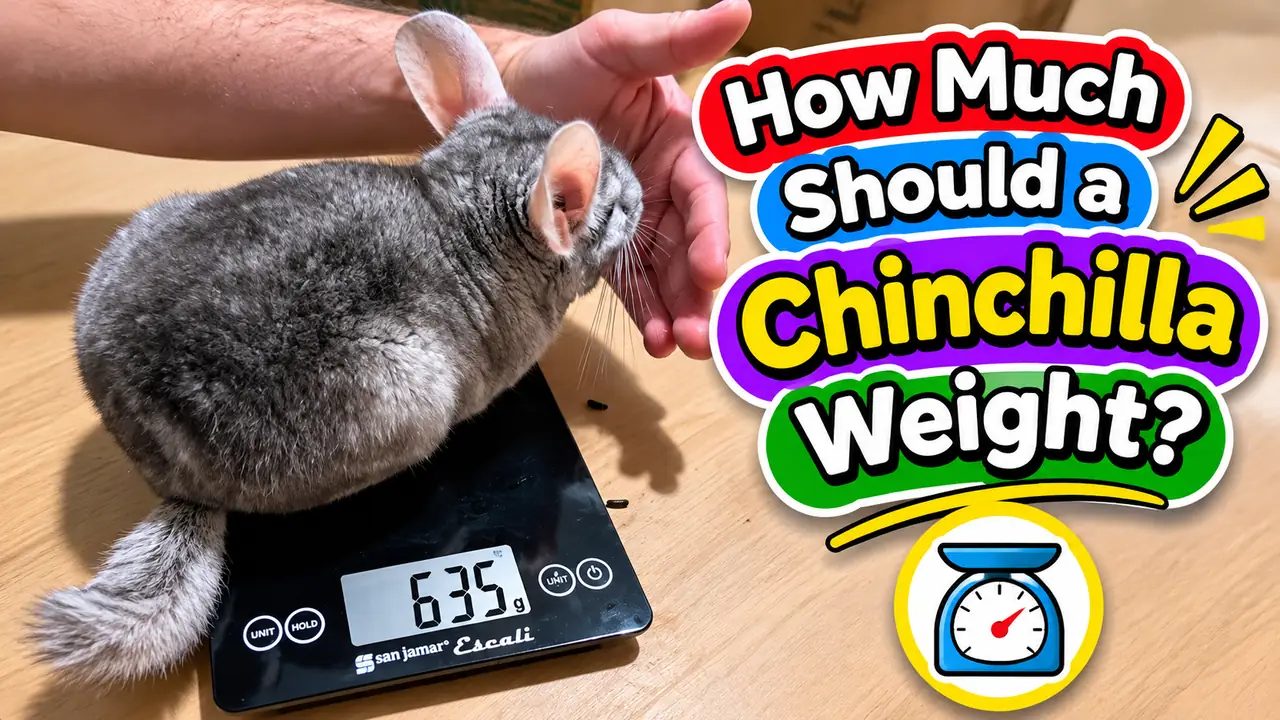
- Get a digital kitchen scale that reads in grams.
- Place a small bowl, box or travel carrier on the scale and press tare to zero it.
- Pop your chinchilla in, ideally with a treat-sized piece of rose hip to keep them still.
- Read the number once it settles and write it down with the date.
- Weigh at the same time of day each week, since meals and droppings shift the number slightly.
Within a few weeks, you’ll know your chinchilla’s normal range. Many chins learn the routine fast and hop into the bowl on their own.
[Add your own note: your chinchilla’s usual weight and how you get them to sit still on the scale.]
Body Condition: What to Feel For
Numbers tell part of the story, and your hands tell the rest. Gently run your fingers along the back, hips and sides during handling.
| Condition | What You’ll Feel |
|---|---|
| Underweight | Spine, hip bones and ribs feel sharp and very easy to find |
| Healthy | Bones can be felt with light pressure under a thin, even layer of padding |
| Overweight | Hard to feel the spine or ribs, with soft padding around the belly and hips |
Overweight chinchillas are less common than underweight ones, but they do happen, usually from too many treats or free-fed pellets. Plenty of hay, measured pellets and room to exercise and jump high bring most chins back into shape.
When a Weight Change Is a Warning
Small ups and downs are normal from week to week. These patterns, though, are worth a call to an exotic vet:
- A steady drop across two or three weekly weigh-ins
- A sudden noticeable loss in a single week
- Weight loss along with eating less, drooling or fewer droppings
- A young chinchilla that stops gaining weight
- Rapid weight gain without any change in diet
Bring your weight log to the appointment. A written record of dates and numbers gives your vet far more to work with than “I think he looks thinner.”
Common Causes of Weight Loss
- Dental disease, such as overgrown molars
- Digestive slowdowns and gut problems
- Stress from a move, noise or a new cage mate
- Poor quality hay or too few pellets
- Heat, which dulls appetite
- Underlying illness in older chinchillas
Keeping a Simple Weight Log
| Date | Weight | Notes |
|---|---|---|
| Week 1 | 560 g | Normal appetite |
| Week 2 | 555 g | Normal |
| Week 3 | 548 g | Ate less hay, watching closely |
| Week 4 | 541 g | Booked a vet check |
A log like this makes trends obvious. A few grams up or down is normal, but a steady slide over several weeks, like the example above, is exactly what you want to catch early.
Use a notebook, a phone note or a spreadsheet. The best system is simply the one you’ll keep up with.
Weight and Diet
Most weight problems come back to food. Unlimited hay, 1 to 2 tablespoons of pellets and very few treats keep most adults steady, as covered in our daily feeding guide and list of safe treats.
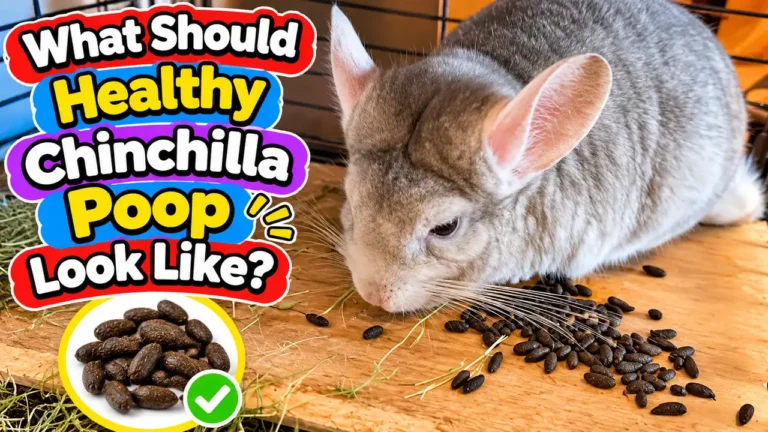
If weight drops while hay sits untouched, dental pain is a strong possibility. Our guide on why a chinchilla stops eating hay explains what to look for, and checking for healthy chinchilla poop each day adds another early warning.
Weight and Exercise

Active chinchillas stay leaner and fitter. Daily playtime and a safe 15-inch wheel both help, as explained in our guide on whether chinchillas need an exercise wheel.
A tall, roomy cage also encourages natural jumping and climbing around the clock. See our guide to the best cage size for a chinchilla for the dimensions that work.
The Simple Habit That Helps Most
Weigh your chinchilla once a week and write it down. It takes less than a minute, costs almost nothing, and is one of the best early warning systems any chinchilla owner can have.