How Often Should You Clean a Chinchilla Cage? A Simple Cleaning Schedule
Five minutes a day, around half an hour a week and a bigger clean once a month. That’s the rhythm that keeps most chinchilla cages fresh, healthy and easy to manage.
In more detail, spot-clean daily, change all the bedding and wipe surfaces weekly, and deep clean the whole cage monthly. Homes with two or more chinchillas, or chins that are messy pee-ers, often need a full bedding change twice a week.
Chinchillas themselves are tidy animals with dry droppings and very little body odor. When a cage smells, it’s almost always a sign that the cleaning routine needs a small tune-up.
The Cleaning Schedule at a Glance
| How Often | Main Jobs | Time Needed |
|---|---|---|
| Daily | Remove droppings and wet bedding, refresh hay and water | About 5 minutes |
| Weekly | Change all bedding, wipe shelves and tray, wash the bottle | 20 to 30 minutes |
| Monthly | Deep clean the cage, accessories and wheel | About an hour |
| Twice a year | Full inspection, replace worn wood and parts | Varies |
Daily: The Quick Tidy
This short check stops little messes from turning into big smells. It’s also your daily chance to notice anything unusual about your chinchilla’s health.
- Scoop out droppings and any wet patches of bedding.
- Remove soiled or flattened hay and add fresh.
- Empty, rinse and refill the water bottle, and note how much your chin drinks.
- Wipe obvious messes from the shelves.
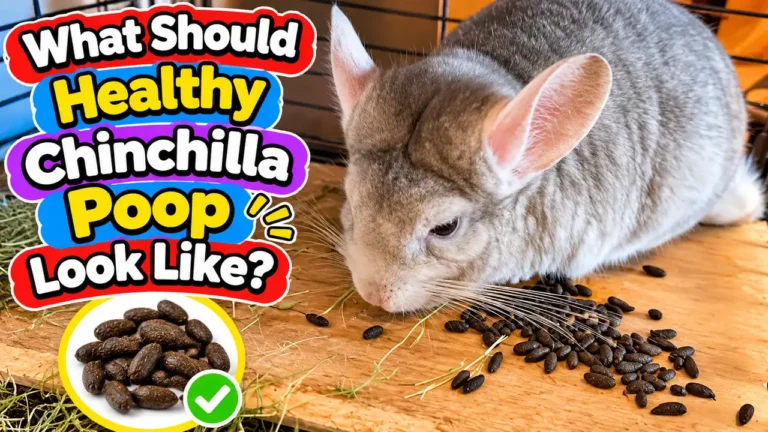
- Check the droppings for size, shape and number against what healthy chinchilla poop looks like.
Don’t worry if you catch your chin nibbling a dropping now and then. It’s a normal part of digestion, and here’s why chinchillas eat their poop.
Weekly: The Reset
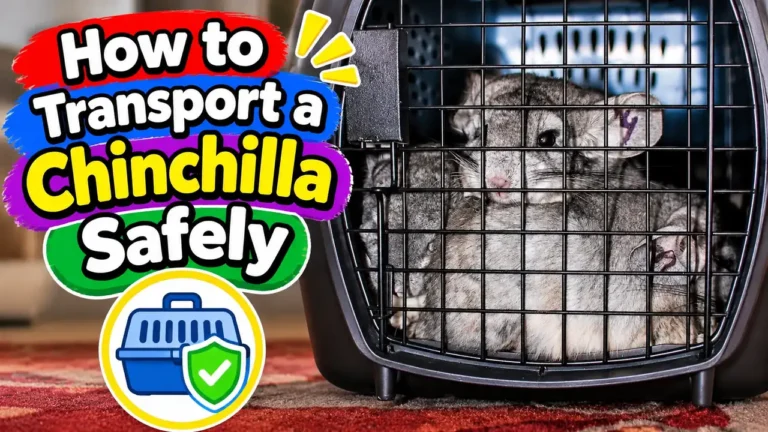
Once a week, give the cage a fuller refresh. It’s easiest while your chinchilla enjoys supervised playtime or rests in a secure carrier, and our guide on how to pick up a chinchilla safely helps with the move.
- Move your chinchilla out of the cage.
- Remove and bag all of the old bedding.
- Wipe the tray and shelves with a mix of half white vinegar and half water.
- Scrub the water bottle and spout with a bottle brush.
- Wash food bowls in hot water and dry them well.
- Shake out or replace fleece liners and pads.
- Let every surface dry completely.
- Add fresh bedding, hay and water, then put the accessories back.
Most of the mess tends to gather in one or two spots. Many chinchillas pick a favorite pee corner, so give that area extra attention.
Monthly: The Deep Clean
The monthly clean goes beyond bedding. Everything comes out, and every surface gets a proper scrub.
- Wash the bars and frame with vinegar solution from top to bottom.
- Soak the tray to loosen any urine scale.
- Scrub or lightly sand wooden shelves, and replace any that are soaked or chewed thin with chinchilla-safe wood.
- Clean the wheel, hideouts, ramps and hay rack.
- Empty and wash the dust bath container.
- Check for loose screws, sharp edges and damaged parts.
Give everything plenty of time to dry. Damp wood or bedding inside a closed cage can quickly lead to mold and skin problems.
Twice a Year: The Inspection
Every six months or so, look over the whole setup with fresh eyes. Replace worn shelves, chewed hideouts and tired fleece, and check the cage for rust or bent bars.
It’s also a good moment to rethink the layout. A new arrangement of ledges can make the cage feel brand new to your chinchilla.
Safe Cleaners and What to Avoid
| Safe to Use | Avoid |
|---|---|
| White vinegar and water, about 50/50 | Strong bleach mixes or bleach left unrinsed |
| Hot water and unscented dish soap | Ammonia-based cleaners |
| Pet-safe enzyme cleaners | Scented sprays and air fresheners |
| A stiff brush and an old toothbrush | Pine oil or phenol disinfectants |
| Paper towels or washable rags | Mixing vinegar with bleach |
Never combine vinegar and bleach, since together they release toxic fumes. Whatever you use, rinse well and let the cage dry fully before your chinchilla goes back in.
Dealing With Urine Scale
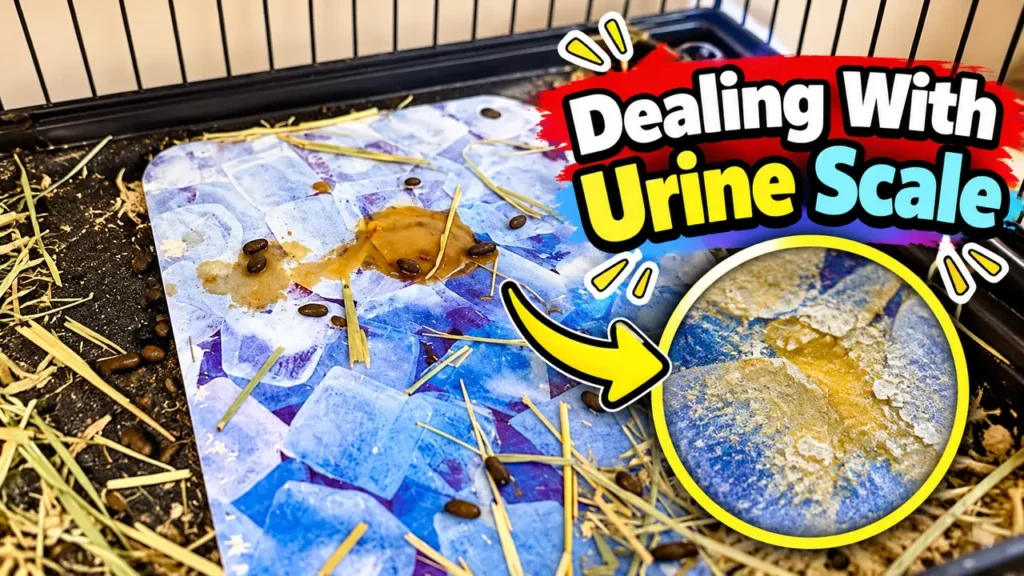
That white, crusty buildup in tray corners is urine scale. Ordinary soap won’t touch it, but vinegar will.
Pour undiluted white vinegar over the crust and leave it for around 10 minutes. It fizzes as it breaks down the mineral deposits, and then it scrubs off far more easily before a good rinse.
If scale keeps building up fast, the tray needs attention more often. A small litter pan placed in the pee corner can catch most of it.
Why Does My Chinchilla’s Cage Still Smell?
The bedding isn’t absorbing well
Some materials hold urine near the surface. Try a more absorbent bedding, such as paper, or add a bit more depth.
Wet bedding is sitting too long
A daily scoop of damp patches makes a huge difference. Leaving everything for the weekly change gives bacteria time to get to work.
Wooden shelves have soaked up urine
Wood absorbs odor over time. Sanding the surface can help, but badly soaked shelves usually need replacing.
Too many chinchillas for the space
Two or more chins in one cage produce more waste. A bigger cage or more frequent bedding changes may be the fix.
Hay is getting soiled
Hay that ends up on the floor and gets peed on starts to smell quickly. A hay rack helps, and so does picking up the mess chins create when they throw things around.
Tips to Make Cleaning Easier
- Put a small litter pan or extra bedding in the favorite pee corner.
- Fit a cage skirt or guard around the base to catch kicked-out bedding.
- Keep a spare set of fleece liners or a backup bag of bedding ready.
- Store your cleaning supplies right beside the cage.
- Clean at the same time each week so it becomes automatic.
[Add your own note: your own cleaning routine or the one trick that saves you the most time.]
Don’t Forget the Dust Bath
The dust bath gets dirty too, with fur, droppings and urine mixed in. Sift out debris after each session and replace the dust regularly, since clean dust is what lets chinchillas roll in dust and come out fresh.
Take the bath out between sessions so it doesn’t become a toilet. That one habit keeps the dust usable for much longer.
Final Tip
Consistency beats intensity. A few minutes every day keeps the weekly clean quick, and a quick weekly clean makes the monthly one easy, which means a fresher home for both of you.