How Big Is a Chinchilla? Size, Length and Weight Explained
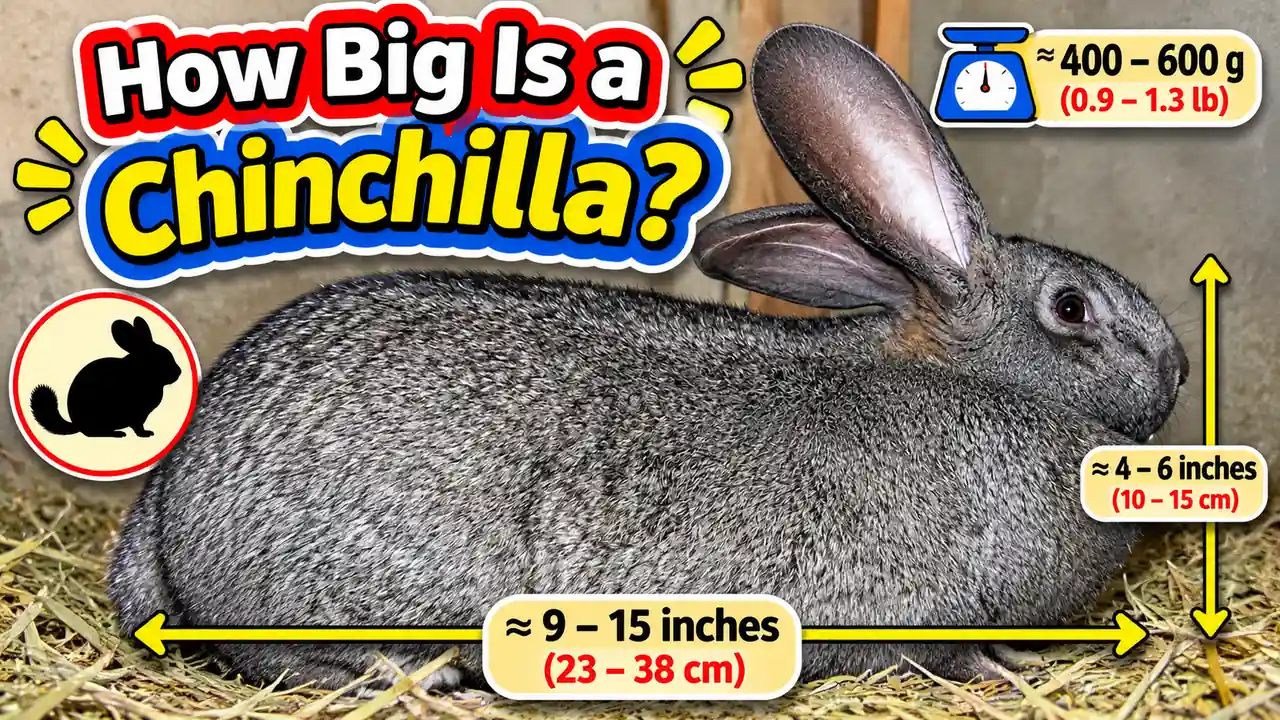
Most adult chinchillas measure 9 to 14 inches from nose to the base of the tail, roughly the length of a sheet of printer paper. Add a bushy 3 to 6 inch tail and a weight of about 1 to 1.5 pounds, and you’ve got a pet that’s far bigger than a hamster but lighter than most guinea pigs.
That thick coat makes them look larger than they really are. Underneath all the fluff, a chinchilla’s body is surprisingly slim and light.
Chinchilla Size at a Glance
| Measurement | Typical Adult Range |
|---|---|
| Body length (nose to base of tail) | 9 to 14 inches (23 to 36 cm) |
| Tail length | 3 to 6 inches (7.5 to 15 cm) |
| Total length with tail | Roughly 12 to 20 inches (30 to 50 cm) |
| Adult weight | About 1 to 1.5 pounds (450 to 680 g), with some females heavier |
| Weight at birth | Around 2 to 2.5 ounces (60 to 70 g) |
How a Chinchilla Compares to Other Small Pets
Side-by-side comparisons make it much easier to picture one in your home.
- Hamster: A chinchilla is several times bigger and heavier than even a large Syrian hamster.
- Rat: Similar in body length to a big pet rat, but rounder, fluffier and usually heavier.
- Guinea pig: About the same length, yet often lighter, since guinea pigs are solid and chinchillas are mostly fluff.
- Rabbit: Smaller and lighter than most rabbit breeds, though a tiny dwarf rabbit can come close in weight.
Are Female Chinchillas Bigger Than Males?
Usually, yes. Females tend to be longer and heavier, and some reach around 800 grams (about 1.75 pounds), while males more often stay closer to 500 grams.
Size alone still isn’t a reliable way to tell the sexes apart. Genetics, diet and how a chinchilla was raised all play a part, so a quick vet check is the surest method.
How Big Do Chinchillas Get as They Grow?

Kits are born tiny but fully furred, weighing about as much as a large egg. They grow quickly over the first few months and are usually close to full adult size by around their first birthday.
Steady growth is a good sign. Weighing a young chinchilla every week or two on a digital kitchen scale makes it easy to catch a stall early.
Why They Look Bigger Than They Are
A chinchilla’s coat is the densest of any land animal, so it adds a lot of visual bulk. If one ever got soaked, you’d see a much smaller animal underneath, though you never want that to happen because their fur dries very slowly.
All that fluff can also hide weight loss. Gently feeling along the back and hips during handling tells you far more than looking does.
What Their Size Means for Their Home
Small body, big needs. Chinchillas are built to leap, so even a pet this compact needs a tall cage of at least 24 x 24 x 48 inches with shelves at different heights.
If you add a wheel, it should be large enough, about 15 inches across, that your chin can run without arching its back. Small hamster or rat wheels are a common and risky mistake.
Their size affects handling too. Chinchillas are light and quick enough to slip out of loose fingers, so a gentle two-handed scoop works best, and a chin that keeps running away when you approach just needs more time and patience.
That compact frame packs serious power. Pound for pound, it’s the reason chinchillas can jump so high and ricochet off cage walls during playtime.
[Add your own note: your own chinchilla’s size or weight, or what surprised you when you first held one.]
Long-Tailed vs Short-Tailed Chinchilla Size
There are two wild chinchilla species. The short-tailed chinchilla is the larger and stockier of the pair, with a thicker neck and smaller ears, while the long-tailed chinchilla is slimmer, with bigger ears and a longer tail.
Pet chinchillas descend mainly from the long-tailed species. Nearly a century of selective breeding has also produced domestic chins that tend to be noticeably bigger than their wild cousins, and our guide to what a chinchilla looks like covers their other features.
Size and Weight: Why Both Matter
Length tells you how big your chinchilla’s frame is, while weight tells you how well it’s doing. Two chins of the same length can have quite different healthy weights depending on their build.
For a full breakdown of normal weights by age and sex, plus how to weigh your chin at home, see how much a chinchilla should weigh.
How to Measure Your Chinchilla
- Wait for a calm moment, ideally with your chin relaxed on your lap or a towel-covered table.
- Use a soft tape measure rather than a stiff ruler.
- Measure along the back from the tip of the nose to the base of the tail.
- Measure the tail separately, from the base to the end of the fur.
- Never stretch or pin your chinchilla down, since a rough estimate beats a stressed pet.
In practice, most owners never need exact measurements. A kitchen scale gives you far more useful health information.
Small Body, Big Safety Considerations
A compact body can squeeze into gaps that look impossibly small. Before playtime, block spaces behind furniture and appliances, and keep cage bars no more than an inch apart, as covered in our cage size guide.
Their size shapes travel too. A vet trip calls for a carrier that’s roomy enough to turn around in but snug enough to feel secure, as described in how to transport a chinchilla safely.
Quick Recap
- Body: 9 to 14 inches long, plus a 3 to 6 inch tail
- Weight: around 1 to 1.5 pounds for most adults
- Males vs females: females are often a little bigger
- Full size: usually reached around 1 year old