What Can Chinchillas Eat Every Day?
Every day, a chinchilla needs three things: unlimited grass hay, a small measured portion of plain chinchilla pellets, and fresh water. Some chins also handle a little leafy green, but hay is the real meal and everything else is a side dish.
That short list surprises plenty of new owners. Chinchillas evolved on tough, dry mountain grasses, so their gut works best on a plain, high-fiber menu that barely changes from one day to the next.
The Everyday Chinchilla Menu
| Food | How Often | How Much |
|---|---|---|
| Grass hay (Timothy, orchard, meadow) | Every day | Unlimited, refreshed daily |
| Plain chinchilla pellets | Every day | About 1 to 2 tablespoons |
| Fresh water | Every day | Always available |
| Leafy greens (romaine, green leaf lettuce) | Optional, daily or a few times a week | A small handful |
| Bell pepper, celery, carrot tops | Now and then | A few small pieces |
| Rose hips or dried herbs | Once or twice a week | One small piece |
| Seeds, nuts, corn, sugary mixes | Never | None |
Hay: The Food That Does Most of the Work

Grass hay should make up the large majority of what your chinchilla eats, often quoted at 75% to 90%. It keeps the digestive system moving and grinds down teeth that grow nonstop, which is a big part of why chinchillas chew everything.
Timothy is the classic choice, while orchard grass and meadow hay make great alternatives or mix-ins. Serve it fresh every day, and toss anything that’s damp, dusty, moldy or smells musty.
Alfalfa hay is a different story. It’s much richer in protein and calcium, so most vets save it for young, pregnant or nursing chinchillas instead of healthy adults.
Pellets: Small, Plain and Measured
Plain, hay-based pellets fill in the vitamins and minerals that hay alone can miss. About 1 to 2 tablespoons a day is the portion most veterinary guides agree on for an adult.
Measuring matters more than people realize. When you give the same amount daily, you’ll spot leftovers right away, and a drop in appetite is often the very first sign that something is off.
Skip any mix containing seeds, nuts, corn, dried fruit or colorful bits. Every piece in a good bag looks the same.
Water: Fresh Every Single Day
Clean water should always be available, in a sipper bottle or a heavy, tip-proof bowl. Change it daily and scrub the bottle often so bacteria can’t build up.
Test the spout each morning too. A stuck ball bearing can leave a chinchilla thirsty even when the bottle looks full.
What About Fresh Greens?
This is where advice varies. Some vet sources say a small handful of dark leafy lettuce like romaine or green leaf, plus bits of bell pepper, celery or carrot tops, is fine daily, while many experienced owners keep fresh produce to a bare minimum.
If you want to offer greens, start tiny and watch the droppings for a couple of days. Soft or smelly droppings mean the gut isn’t ready for that much moisture, so scale back.
Go easy on high-calcium greens such as kale and parsley, and skip iceberg lettuce, which offers very little. Carrots are sugary, so treat them as an occasional nibble rather than a staple.
A Sample Day of Feeding
Splitting food into two feeds fits a chinchilla’s natural rhythm, since they’re liveliest in the evening and early morning.
Morning
- Fill the hay rack with fresh hay.
- Refresh the water and check the spout.
- Add about half of the day’s pellets.
Evening
- Top up the hay and remove anything soiled.
- Offer the rest of the pellets.
- Add a few greens, if you feed them.
- Glance at the droppings to make sure they look normal.
[Add your own note: your chinchilla’s daily feeding routine or favorite type of hay.]
Foods That Don’t Belong on the Daily Menu
- Seeds, nuts and sunflower kernels
- Corn and starchy cereals
- Bread, crackers and pasta
- Chocolate, candy and yogurt drops
- Dairy, meat or anything salted
- Large amounts of fresh fruit
These foods are too fatty, starchy or sugary for a gut built around grass. Even small amounts given regularly can lead to bloating, diarrhea and dental trouble.
A Few Quick Questions
Do chinchillas need a salt or mineral block?
No. A good hay and pellet diet already covers their needs, so a salt lick isn’t necessary.
Is it normal for my chinchilla to eat its droppings?
Yes. They eat special soft droppings to absorb extra nutrients, which is why chinchillas eat their poop, and it’s a healthy part of digestion.
Can I switch my chinchilla to a different pellet brand?
You can, but do it gradually over a couple of weeks by mixing old and new. Sudden switches are a common cause of tummy upsets.
How Diet Changes With Age
Kits and young chinchillas
Growing chins still eat mostly grass hay and plain pellets, but some vets allow a little alfalfa in the mix for extra protein and calcium during growth. Ask your vet before adding it, and phase it out as your chinchilla matures.
Adults
Healthy adults do best on the simple menu above: unlimited grass hay, measured pellets and fresh water. Consistency is the goal, since sudden changes are what tend to upset their gut.
Seniors
Older chins with worn teeth can find coarse hay hard work. Softer, leafier hay helps, and regular weigh-ins show whether your senior is holding its condition.
Signs Your Chinchilla’s Diet Is Working
- Plenty of firm, dry, rice-shaped droppings, just as our guide to healthy chinchilla poop describes
- A steady weight from week to week, within normal healthy weight ranges
- Bright orange front teeth
- A thick, even coat
- Good energy during evening playtime
- Eager interest in fresh hay
If your chinchilla starts leaving hay untouched, take it seriously. Our guide on why a chinchilla stops eating hay walks through the common causes.
Storing Hay and Pellets
Keep hay somewhere cool and dry with a little airflow, such as a cardboard box or a breathable bag. Sealed plastic tubs in warm rooms can trap moisture and spoil a good batch.
Store pellets in an airtight container away from heat and sunlight, and use them before the date on the bag. Buying smaller bags more often keeps them fresher.
Treats and Water
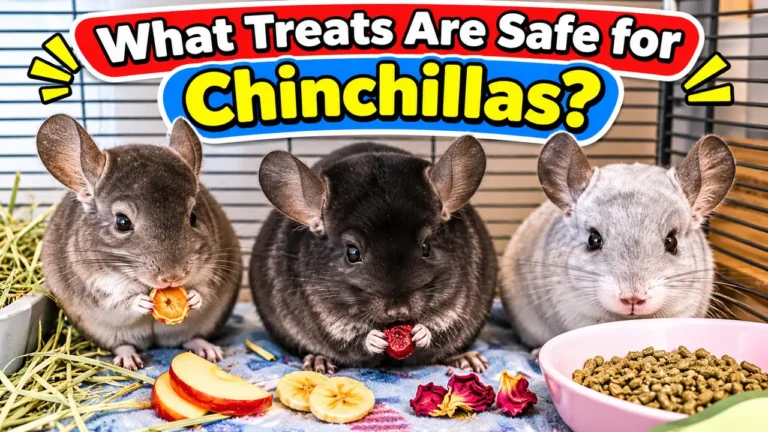
Extras belong on the side, not on the main menu. See our list of safe treats for chinchillas for the best options, our guide on how much water a chinchilla needs daily for drinking habits, and our complete chinchilla care guide for everything else.
The Daily Rule to Remember
Hay first, pellets measured, water fresh and treats tiny. Stick to that rhythm every day and you’ve covered the biggest part of keeping a chinchilla healthy.