Do Chinchillas Need an Exercise Wheel? Safe Wheels, Sizes and Alternatives
Strictly speaking, no. What a chinchilla truly needs is daily exercise, and a wheel is simply one of the easiest ways to provide it.
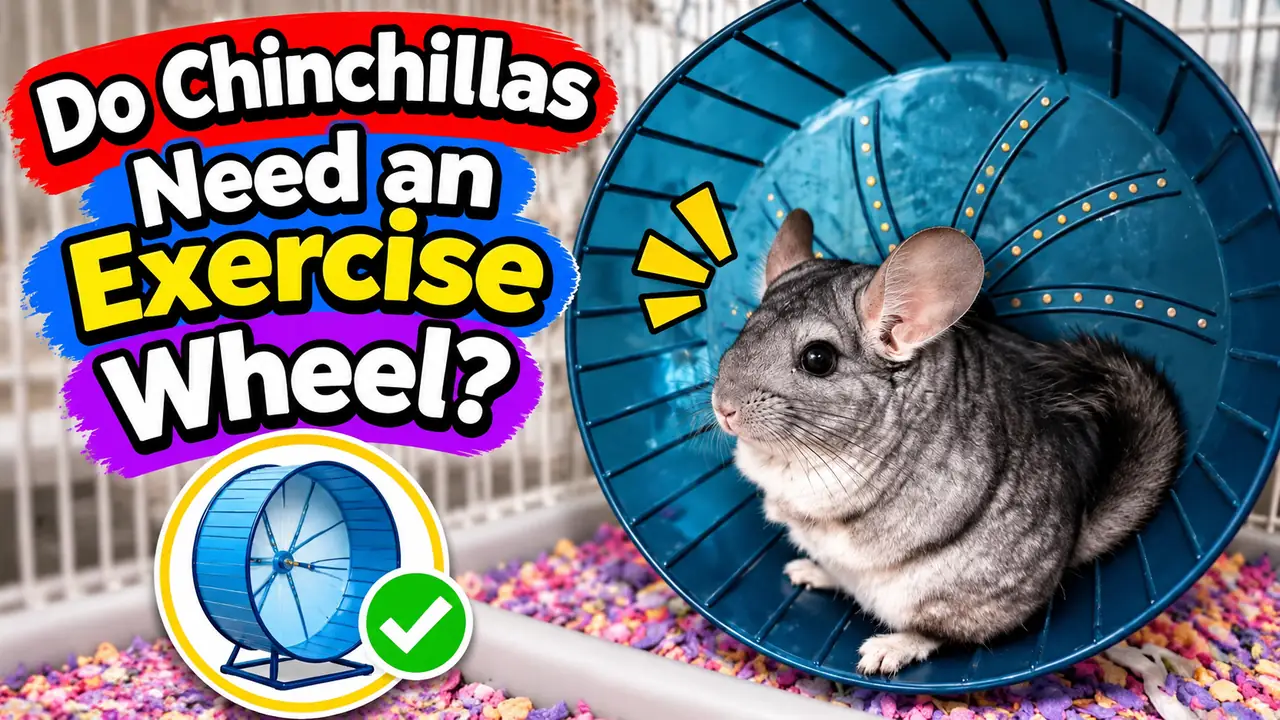
Many vets and owners recommend one anyway, and some care guides go as far as calling a proper chinchilla wheel essential. The catch is that it must be the right kind: at least 15 inches across with a solid running surface, because the wrong wheel can do more harm than good.
Why Exercise Matters So Much
In the wild, chinchillas bound across rocky slopes and cover a lot of ground every night. Pet chinchillas keep that same energy, which shows up as jumping, wall-running and sudden bursts of speed.
If you’ve ever seen yours suddenly run around like crazy, you’ve seen how much energy needs an outlet. Without enough exercise, chins can become bored, stressed, overweight or prone to habits like fur chewing.
What a Wheel Does Well
- Exercise on demand: Chinchillas are most active at night, and a wheel lets them run while you sleep.
- Stress relief: Running gives pent-up energy a natural outlet.
- Weight control: Regular running helps keep chins lean, fit and at a healthy weight.
- Boredom busting: A wheel adds variety to long hours inside the cage.
The Safe Wheel Checklist
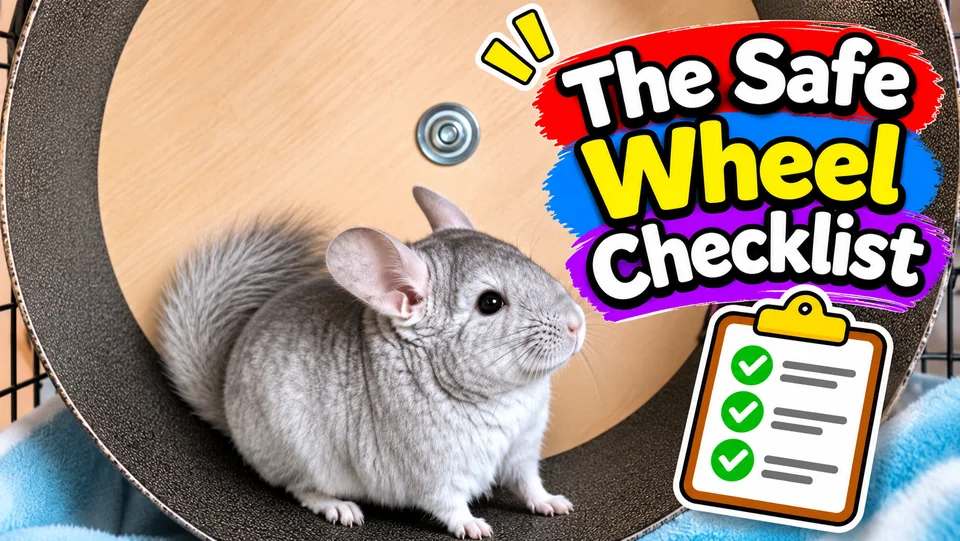
Not every wheel sold for small pets is safe for chinchillas. A good chinchilla wheel ticks every one of these boxes:
- At least 15 inches in diameter: Smaller wheels force the back to arch while running, which can strain the spine.
- A solid running surface: No wire, mesh, rungs or gaps where toes or feet can catch.
- A wide track: Around 5 inches or more, so your chin feels stable.
- Metal construction: Plastic gets chewed, and chewed plastic can be swallowed.
- No crossbar across the open side: An axle or support bar can trap or injure a tail or leg.
- Secure mounting: Bolted firmly to a roomy cage or set on a heavy, stable stand.
- Smooth, quiet bearings: Better for your sleep and less startling for your chin.
Open-sided designs help too, because they let air move around your chinchilla. With fur this dense, staying cool during exercise really matters.
Wheels to Avoid
- Hamster, rat or mouse wheels, which are far too small
- Wire or mesh wheels with gaps in the running surface
- Plastic wheels a chinchilla can easily chew
- Wheels with a central support bar across the open side
- Wobbly wheels that rock or tip when used
Signs a Wheel Is Too Small
- A visibly curved or hunched back while running
- Short, choppy steps instead of a smooth stride
- Trying the wheel and quickly giving up
- Bumping the head or tail on the frame
If you notice any of these, take the wheel out until you can replace it. No wheel at all is better than the wrong wheel.
How to Introduce a Wheel
Some chinchillas hop on right away. Others need a little time to trust a moving object.
- Place the wheel on the cage floor or another low, stable spot at first.
- Leave it still for a day or two so your chin can sniff and explore it.
- Set a tiny treat, like a piece of rose hip, on the running surface.
- Gently turn the wheel a little while your chinchilla watches.
- Once they’re comfortable, mount it in its permanent spot.
Be patient. A few chinchillas never take to wheels, and that’s fine as long as they get plenty of exercise in other ways.
Wheel vs Other Ways to Exercise
| Option | Pros | Things to Watch |
|---|---|---|
| Exercise wheel | Available anytime, great for night running | Must be 15 inches and solid |
| Supervised playtime | Lots of space and bonding time with you | Room must be fully chinchilla-proofed |
| Ledges and climbing | Natural jumping and climbing | Stagger heights to avoid long falls |
| Playpen | Safe running space outside the cage | Check for gaps and chewable materials |
| Saucer spinners | Fun for some small pets | Not a substitute for a proper wheel |
Out-of-Cage Playtime Still Matters

Even with a great wheel, most chinchillas benefit from daily supervised time outside the cage. Aim for at least half an hour in a safe, chinchilla-proofed room or playpen, ideally in the evening.
Block gaps behind furniture, tuck away cords and move houseplants out of reach first. Then sit on the floor and let your chinchilla explore at its own pace, which builds trust at the same time.
Those lively evening hours are completely natural. A chin that loves to run around at night is behaving exactly as nature intended.
[Add your own note: whether your chinchilla uses a wheel and how they reacted the first time.]
Wheel Safety Tips
- Keep the room cool, since running raises body heat quickly, and know what temperature is too hot.
- Clear droppings off the running surface during daily spot-cleans.
- Check bolts and bearings weekly for wear or looseness.
- Leave space around the wheel so there’s nothing to crash into.
- Stop wheel use if you notice limping, sore feet or heavy breathing.
Quick Answers
Can a chinchilla use a 12-inch wheel?
Some young or very small chins manage on 12 inches, but 15 inches is the standard recommendation for adults. If your chinchilla is fully grown, go for the larger size.
Are chinchilla wheels noisy?
Cheaper wheels can squeak or rattle. Wheels with sealed ball bearings run much more quietly, which matters if the cage is near a bedroom.
How long will my chinchilla use the wheel?
Most run in short bursts throughout the night rather than in one long session. That pattern is normal and healthy.
The Verdict
A wheel isn’t mandatory, but a safe one is among the best upgrades you can give a pet chinchilla. Choose a solid 15-inch metal wheel, pair it with daily playtime, and your chin will have plenty of ways to burn off all that energy.