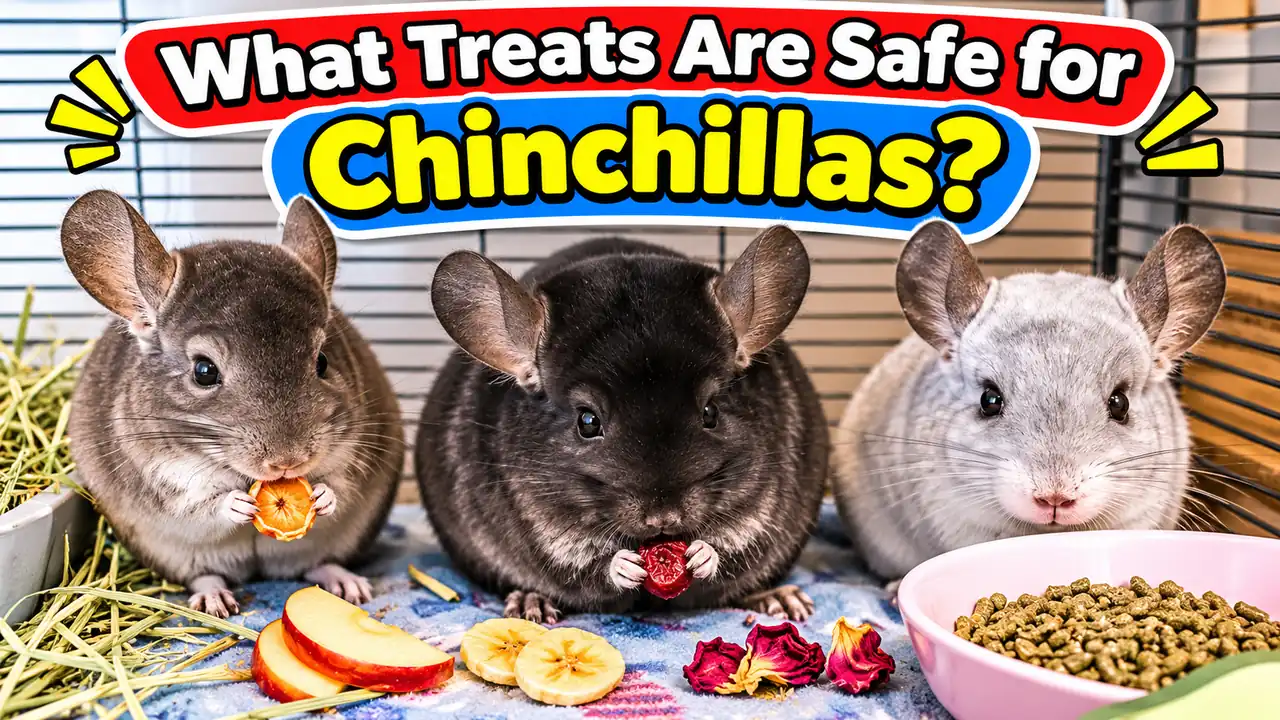
What Treats Are Safe for Chinchillas?
Treats are the quickest way to win a chinchilla’s trust, and the quickest way to upset its stomach. The safest picks are plain and dry: dried rose hips, dried flowers and herbs, a pinch of rolled oats, or an apple wood chew stick.
Sweet, fatty snacks are where the trouble starts. A chinchilla’s gut was built for grass, so both the treat you choose and the amount you give really count.
The Treat Traffic Light
I find it easiest to sort chinchilla treats into three groups. It’s a simple way to remember what’s a regular reward, what’s a rare one, and what never goes in the cage.
Green: Safe Treats for Regular Use
These are the best options for everyday training and bonding, always in small amounts.
- Dried rose hips: A favorite of many chinchillas, rich in fiber and vitamin C. Snap one in half for a smaller reward.
- Dried flowers and leaves: Hibiscus, calendula, chamomile, rose petals and dried dandelion leaves add flavor without a sugar spike.
- Plain hay cubes or biscuits: Timothy-based cubes work as a chew and a treat in one.
- Safe chew sticks: Apple wood and kiln-dried pine feel like a reward and help wear down teeth.
Yellow: Once-in-a-While Treats
These are fine now and then but higher in sugar or starch, so keep them small and occasional.
- Raisins: Much loved but very sweet. Cut one into pieces and limit it to a few times a week at most.
- Dried apple: A sliver works better than a whole chip.
- Rolled oats or shredded wheat: A small pinch or a corner piece, unsweetened only.
- Fresh apple or carrot: A thumbnail-sized bite, never a full slice.
Red: Treats to Avoid
- Nuts and seeds, including sunflower seeds
- Chocolate, candy and yogurt drops
- Sweetened cereals, crackers and bread
- Corn and popcorn
- Dairy, meat and anything salted
- Avocado and rhubarb
- Fruit-heavy treat mixes packed with dried fruit and seeds
Plenty of colorful snacks sold for small pets land in the red group. Check the ingredients, and if sugar, honey, seeds or yogurt coatings sit near the top, put the bag back.
How Much Is Too Much?
Treats should stay well under 10% of what your chinchilla eats. In real life, that’s roughly a teaspoon’s worth in a day at the very most, and plenty of days with none at all.
Counting by the piece keeps it simple. One rose hip, two dried petals or a small pinch of oats is plenty for a single session.
After trying anything new, keep an eye on the droppings. If they turn soft, small or smelly, that treat is too rich or you’ve given too much.
Using Treats to Build Trust

This is where treats really earn their place. Hold a small piece on an open, flat palm at the cage door and let your chinchilla come to you instead of reaching in.
Pick a regular time, ideally the evening when chins are wide awake, and reward calm approaches. Within a few weeks, many start waiting at the door, and some will stare at you the moment treat time rolls around.
Gentle treat training helps with nippy chinchillas too. If yours tends to bite, rewarding soft, calm behavior from a flat hand works far better than snatching your fingers away.
For a foraging game, tuck a bit of rose hip or a dried flower deep in the hay. It keeps them busy and gets them digging through hay, which is exactly the habit you want.
[Add your own note: your chinchilla’s favorite treat and how they react when they see it.]
Common Treat Mistakes
- Handing out a treat every time your chinchilla comes to the bars
- Offering several different treats in the same day
- Using fresh fruit as a regular reward
- Trusting a product just because the label says it’s for chinchillas
- Tempting a chinchilla that’s off its food with treats, when a vet call is what’s needed
Simple Treat Ideas to Keep on Hand
You don’t need fancy packaged snacks. These simple options are easy to store and safe in small amounts:
- A single dried rose hip, broken in half
- A pinch of dried chamomile or calendula flowers
- A few dried dandelion leaves
- A small corner of plain, unsweetened shredded wheat
- An apple wood twig from our safe wood list
Keep dried treats in an airtight jar away from sunlight, and throw out anything that smells musty or looks damp.
Treats for Young, Senior and Sensitive Chinchillas
Young chinchillas have especially delicate digestion. Wait until they’ve settled in and are eating hay well before offering treats, then start with tiny pieces.
Older chins with worn teeth may struggle with hard treats, so dried flowers and leaves are often easier. If your chinchilla has had soft droppings, dental trouble or weight changes, ask your vet before offering treats at all, and keep an eye on healthy chinchilla poop and healthy weight ranges.
Treats vs the Daily Diet
Treats are the fun extra, never a replacement for the basics. The real foundation is unlimited hay, measured pellets and fresh water, which our daily feeding guide covers in full.
If treats ever start crowding out hay, cut back straight away. A chinchilla that fills up on goodies and stops eating hay is heading for trouble.
The Bottom Line
The best chinchilla treats are dry, plain and small: rose hips, dried flowers, hay cubes and safe chew sticks. Keep sweet extras rare, skip anything fatty or sugary, and your chinchilla gets all the joy of a reward without the tummy trouble.