What Wood Is Safe for Chinchillas to Chew? Safe and Toxic Wood List
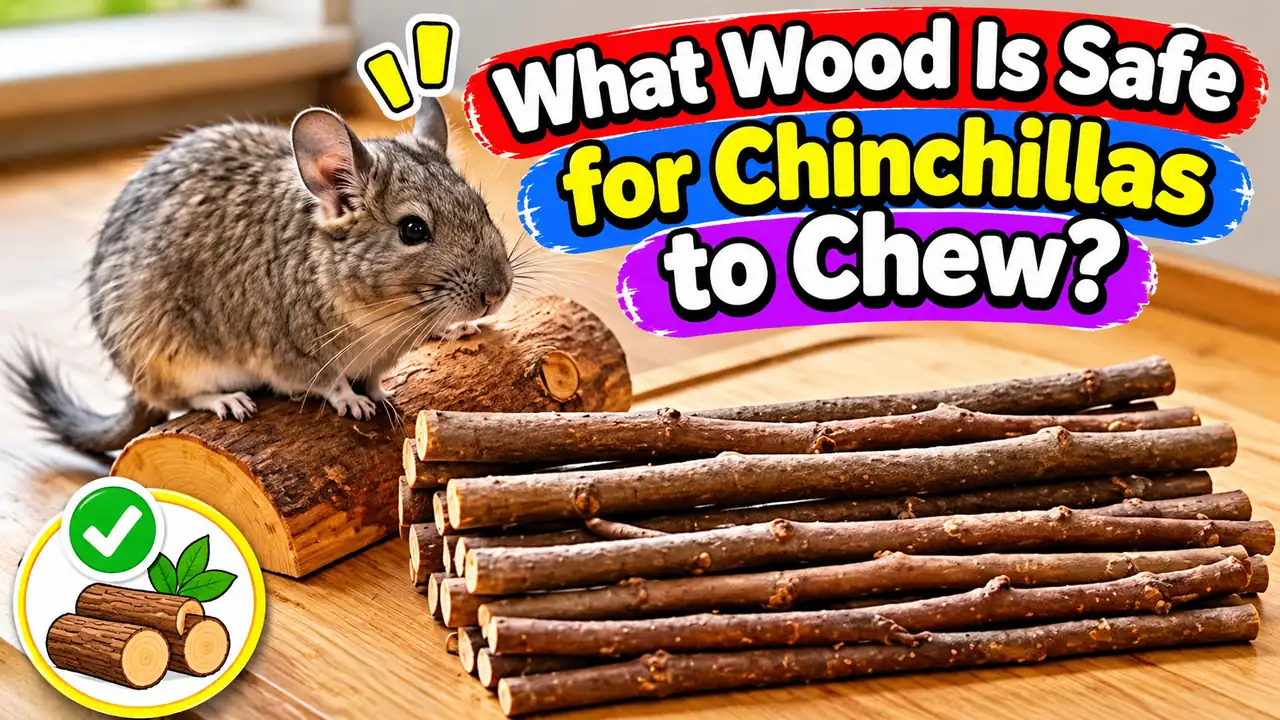
The safest woods for chinchillas to chew include apple, pear, willow (but not white willow), kiln-dried pine, elm, hazelnut and manzanita. Avoid cedar, cherry, plum and other stone fruit woods, citrus, redwood, fresh pine, oleander and anything treated, painted or glued.
Chewing isn’t optional for chinchillas. Their teeth grow for life, so the right wood keeps them healthy, while the wrong wood can make them seriously ill.
Safe vs Unsafe Wood at a Glance
| Generally Safe | Avoid |
|---|---|
| Apple | Cedar |
| Pear | Cherry |
| Willow (not white willow) | Plum, peach, apricot and nectarine |
| Kiln-dried pine | Fresh or untreated pine |
| Elm | Citrus woods (orange, lemon, grapefruit) |
| Hazelnut | Redwood |
| Manzanita | Oleander |
| Ash | Walnut and yew |
| Aspen | Pressure-treated, painted or glued wood, plywood and particleboard |
This list is a starting point, not a guarantee. If you can’t identify a wood with confidence, don’t give it to your chinchilla.
Why Chewing Wood Matters
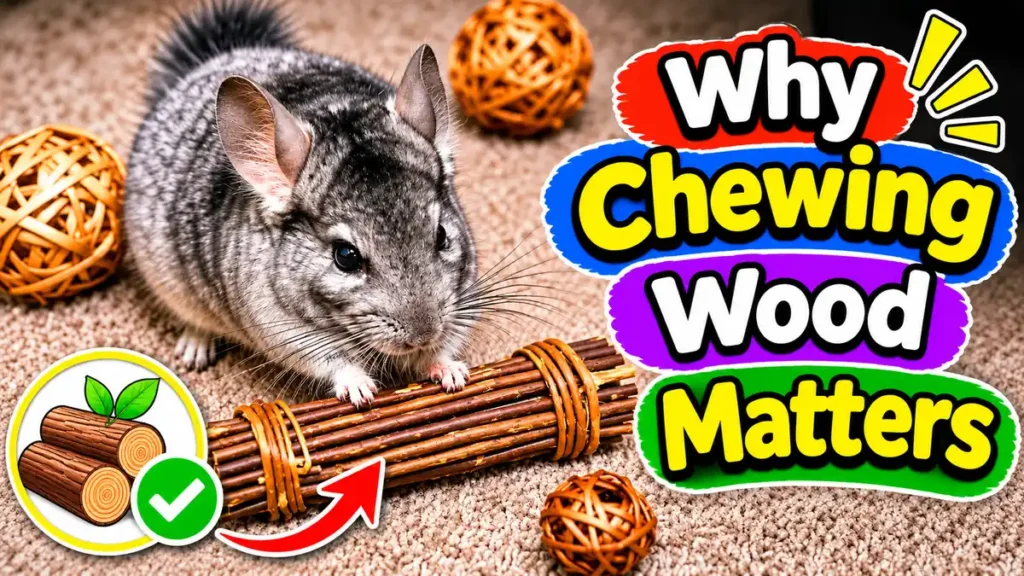
A chinchilla’s teeth never stop growing. Hay does most of the grinding work, but gnawing on wood helps keep the front teeth in shape and gives your chin a healthy outlet for a powerful instinct.
That instinct is exactly why chinchillas chew everything, from cage bars to baseboards. Giving them safe wood to destroy protects both their health and your furniture.
Chewing is also a big part of chinchilla enrichment. A fresh stick or a new block can keep a bored chin busy for hours.
Why Some Woods Are Dangerous
Aromatic oils
Cedar and fresh pine contain strong aromatic oils and resins. These can irritate a chinchilla’s airways and have been linked to liver problems in small mammals, which is also why cedar bedding is best avoided.
Natural toxins in stone fruit trees
Cherry, plum, peach, apricot and nectarine belong to a family of trees whose bark, leaves and pits contain compounds that can release cyanide. Even though their fruit is popular, the wood isn’t worth the risk.
Chemicals and treatments
Pressure-treated lumber, painted wood, varnished pieces and plywood held together with glue can all carry chemicals your chinchilla shouldn’t swallow. The same goes for branches from trees sprayed with pesticides.
The Gray Area: Birch, Maple and Pine
Safe-wood lists don’t always agree. The Merck Veterinary Manual lists birch, maple and pine without phenol oils as safe, while some breeder lists put birch and maple on the avoid side.
Pine is safe only when it’s kiln-dried, since that process drives off most of the harmful oils. That’s why kiln-dried pine shelves and ledges are so common in chinchilla cages.
If you’d rather skip the debate, stick to the woods nearly everyone agrees on: apple, pear, willow and kiln-dried pine.
Types of Chews Your Chinchilla Will Enjoy
- Apple wood sticks: The classic chew, widely available and loved by most chins.
- Willow balls and rings: Light, crunchy and fun to toss around.
- Kiln-dried pine blocks and ledges: Perfect for chewing while also serving as furniture.
- Pumice stones: A good extra for wearing down teeth, used alongside wood.
- Hay cubes and timothy chews: Double as food and a chewing workout, much like other safe treats.
- Untreated, natural wooden houses: Something to hide in and gnaw on at the same time.
Mix up shapes and textures. Some chinchillas ignore apple sticks entirely but happily shred a willow ball or a pine block.
Store-Bought or Foraged?
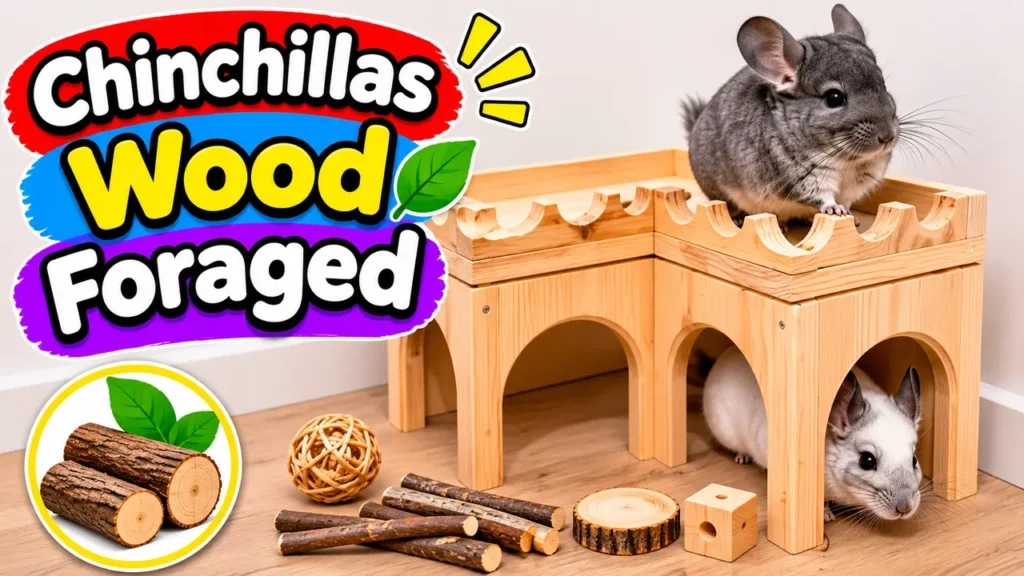
Store-bought chews made for small animals are the easiest option, as long as the label lists only safe, untreated wood. Skip colorful chews, since dyes and glue have no place in a chinchilla’s diet.
Foraging your own branches can save money, but it takes care. You need to be completely sure of the species and that the tree hasn’t been sprayed.
How to Prepare Foraged Branches
- Identify the tree with certainty. If you’re not 100% sure what it is, leave it.
- Choose a clean source. Pick branches from pesticide-free trees away from roads and sprayed gardens.
- Check for problems. Skip any wood with mold, fungus, lichen or rot.
- Scrub well. Wash each branch in hot water with a stiff brush, then rinse thoroughly.
- Dry it completely. Bake on a low oven setting, around 200°F to 250°F (95°C to 120°C), for one to two hours while checking often, or air-dry for several weeks.
- Store it dry. Keep finished branches in a breathable container until you’re ready to use them.
[Add your own note: your chinchilla’s favorite chew and how quickly they go through it.]
Signs Your Chinchilla Needs More to Chew
- Chewing cage bars, plastic or bedding
- Gnawing on their own fur or a cage mate’s fur
- Ignoring hay and eating mostly pellets
- Front teeth that look long, uneven or white instead of orange
- Drooling, dropping food or weight loss
The last few signs can also point to dental disease, so book a vet check if you notice them. Chewing alone can’t fix overgrown back teeth.
Common Chew Mistakes to Avoid
- Giving branches from unknown or roadside trees
- Assuming all fruit tree wood is safe
- Offering painted, stained or glued wooden toys
- Using cedar or fresh pine shelves inside the cage
- Leaving moldy or soggy wood in the cage
- Relying on wood alone and skimping on hay
Quick Answers
Can chinchillas chew cardboard?
Plain, ink-free cardboard is fine for a quick shred now and then, but it isn’t a substitute for wood. Remove it once it gets soggy or soiled.
How often should I replace chews?
Swap out chews once they’re heavily soiled, moldy or chewed down to small pieces that could be swallowed whole. Rotating new ones in every week or two keeps things interesting.
Is bark safe to eat?
Bark from safe, clean, properly dried branches is generally fine and many chins enjoy peeling it. Remove any loose or flaking bark that looks dirty or moldy.
The Bottom Line
Stick with well-known safe woods like apple, pear, willow and kiln-dried pine, and avoid cedar, stone fruit woods, citrus, redwood and anything treated. A steady supply of safe chews, plus plenty of hay, is one of the simplest ways to keep your chinchilla’s teeth and mind in great shape.