Why Is My Chinchilla Not Eating Hay?
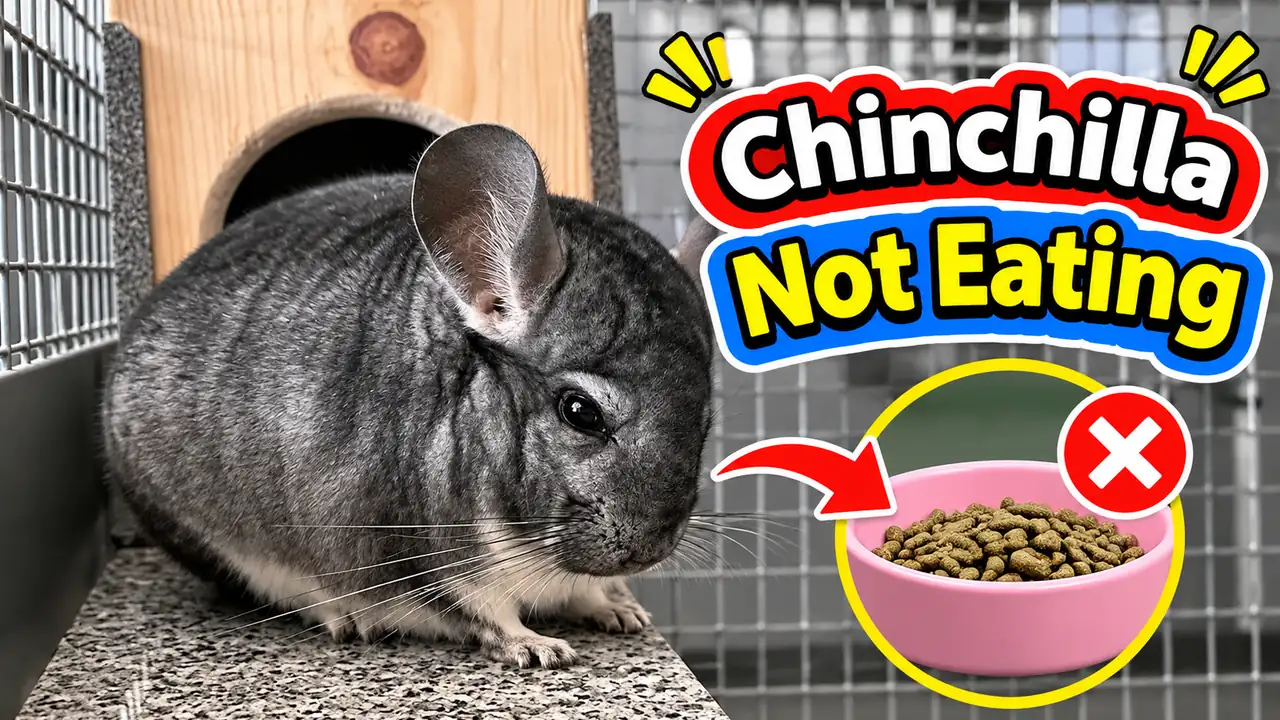
If your chinchilla has stopped eating completely, or you’re seeing few or no droppings, call an exotic vet today. Chinchillas can’t vomit, and once their gut slows down, things can become life-threatening within hours to days.
If your chin is still eating pellets but snubbing the hay, you have a little more time to investigate. The cause usually comes down to two possibilities: something is wrong with the hay, or something is wrong with your chinchilla.
Call the Vet Right Away If You Notice
- No eating at all for several hours
- Very few, tiny or no droppings
- A bloated or tight-feeling belly
- A hunched posture, lethargy or teeth grinding
- Drooling, a wet chin or damp front paws
- Sudden weight loss
These signs point toward problems such as GI stasis, bloat or dental disease. None of them improve by waiting it out.
Why Your Chinchilla May Be Refusing Hay
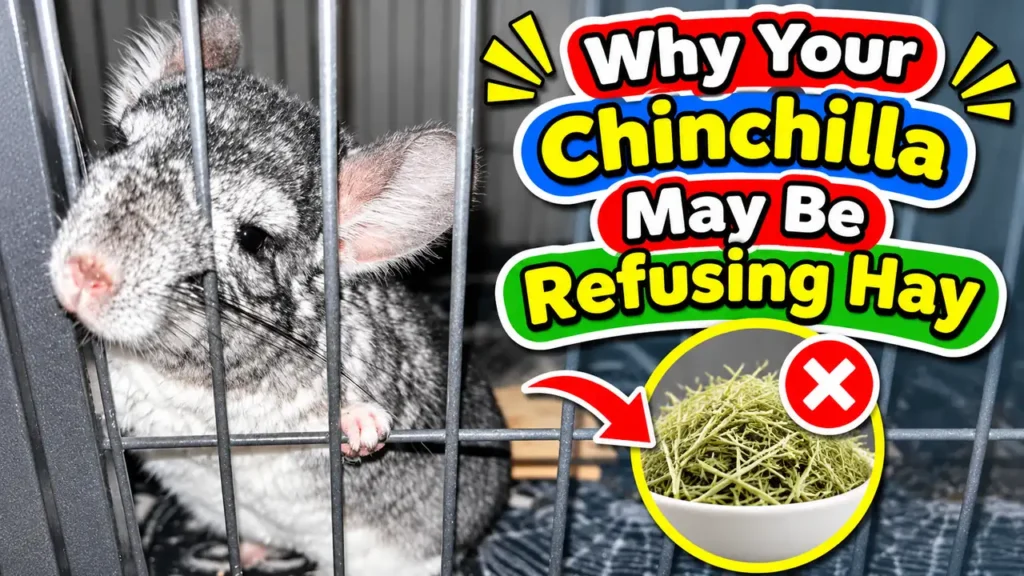
1. Dental Pain
Sore teeth are one of the most common reasons a chinchilla goes off hay. Hay takes serious chewing, so a chin with sharp molar spurs or misaligned teeth often switches to softer pellets first.
Look for drooling, dropped food, slow or one-sided chewing and gradual weight loss. The back teeth can’t be checked properly at home, so an exotic vet will need to examine the mouth and may take X-rays.
2. A Slowing Gut
GI stasis happens when food stops moving through the digestive tract the way it should. Dental pain, stress, overheating and a low-fiber diet can all trigger it.
Fewer droppings, a swollen belly and low energy are the big clues. This one is an emergency, and treatment often involves fluids, pain relief and syringe feeding to get things moving again.
3. The Hay Itself
Sometimes the chinchilla is perfectly fine and the hay is the real problem. Dusty, damp, musty, brown or moldy hay gets refused, and rightly so.
A new bag can taste or feel different even from the same brand, since every harvest varies. Coarse, stalky hay is also harder work than a softer, leafier batch.
4. Too Many Pellets or Treats
A chinchilla stuffed with tasty pellets and treats has little reason to work through hay. Keeping the pellet bowl topped up all day is a very common culprit.
5. Heat, Stress or a Big Change
A hot room, a recent move, a new cage mate or loud noise can all dull the appetite. A chin that’s also hiding from you more than usual may be stressed or feeling unwell.
6. Where the Hay Sits
Hay scattered on the cage floor gets soiled fast, and most chinchillas won’t touch it after that. A rack that’s awkward to reach or empty overnight can look like refusal too.
Quick Troubleshooting Table
| What You Notice | Likely Cause | What to Do |
|---|---|---|
| Eats pellets, drools, drops food | Dental pain | Book an exotic vet dental check |
| Few droppings, bloated belly | GI stasis or bloat | Emergency vet visit today |
| Sniffs the hay and walks away | Stale or poor-quality hay | Swap in a fresh bag |
| Eagerly eats treats and pellets | Too many extras | Measure pellets and pause treats |
| Sluggish, red ears, warm room | Overheating | Cool the room and call the vet |
| Picky after a move or change | Stress | Keep the routine quiet and steady |
How to Get Your Chinchilla Back on Hay
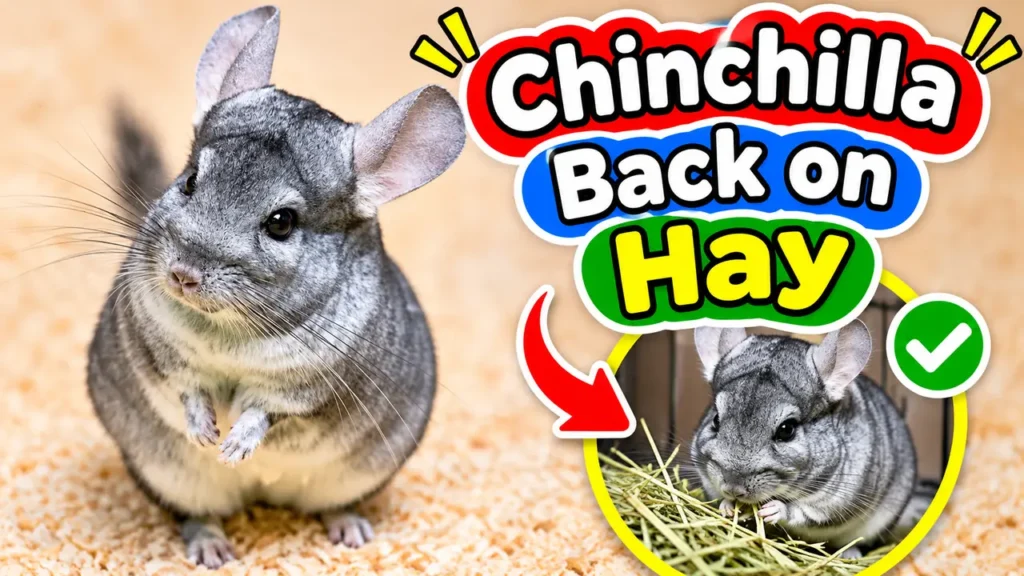
Once a vet has ruled out a medical problem, these steps usually help a fussy chinchilla rediscover its hay:
- Buy a fresh bag and give it a sniff. Good hay smells sweet and grassy and has plenty of green in it.
- Try a different grass hay, such as orchard or meadow, or a softer, leafier cut of Timothy.
- Mix two hays together for variety.
- Measure pellets to about 1 to 2 tablespoons a day instead of topping up the bowl.
- Pause sweet treats completely for a while.
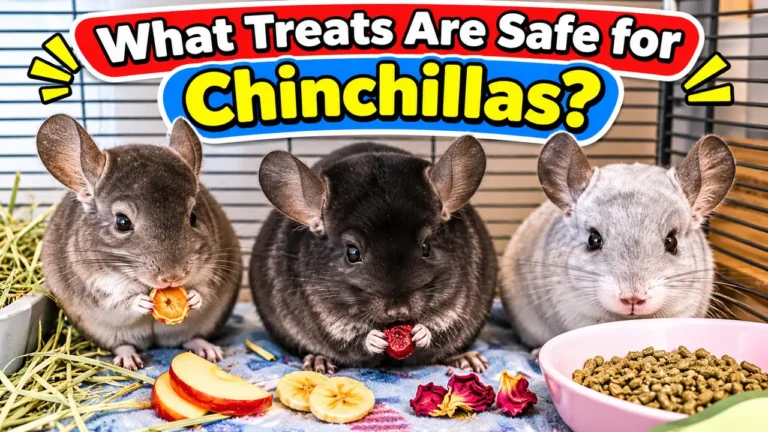
- Sprinkle a few dried herbs or flower petals through the hay to spark interest.
- Offer hay in more than one spot, such as a rack and a clean corner of a hideout.
- Replace hay daily so it never sits soiled or flattened.
If your chinchilla starts throwing things around, hay included, that’s often play or frustration rather than true refusal. Watch whether any of it actually gets eaten.
[Add your own note: what helped your own chinchilla start eating hay again, if you’ve been through it.]
What Not to Do
Don’t wait and see if eating or droppings have dropped off. Don’t try to fix a hay strike with extra treats, and don’t attempt syringe feeding without your vet’s guidance, since it has to be done the right way with the right recovery formula.
How to Choose Good Hay
| Sign | Good Hay | Poor Hay |
|---|---|---|
| Color | Mostly green, with some natural tan | Brown, gray or bleached |
| Smell | Sweet and grassy | Musty, sour or dusty |
| Texture | A mix of leaves and stems | Very coarse sticks or crumbly dust |
| Feel | Dry and springy | Damp, clumped or with moldy spots |
Store hay somewhere cool and dry with a little airflow. A sealed plastic tub in a warm room can trap moisture and turn a good bag bad within weeks.
Understanding Timothy Hay Cuts
Timothy hay is often sold by cutting. First cut tends to be coarse and stemmy, second cut is usually the balanced middle ground, and third cut is very soft and leafy.
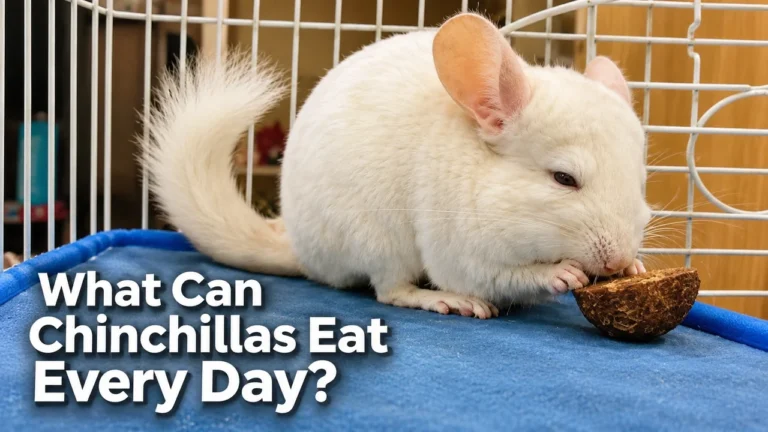
Many chinchillas prefer second cut. If yours is fussy, try a different cut before giving up on Timothy, or mix it with orchard grass, and see our guide to what chinchillas can eat every day for the full menu.
Watching the Recovery
After a hay strike, keep a close eye on your chinchilla for a few weeks. Weigh weekly, as explained in our healthy weight guide, and check daily that healthy chinchilla poop returns to its normal size and number.
Keep the room cool as well, since heat dulls appetite. Our guide on what temperature is too hot for a chinchilla covers the safe range.
Final Word
A chinchilla that ignores its hay is trying to tell you something. Check the hay, check the droppings, and when in doubt, get an exotic vet involved sooner rather than later.