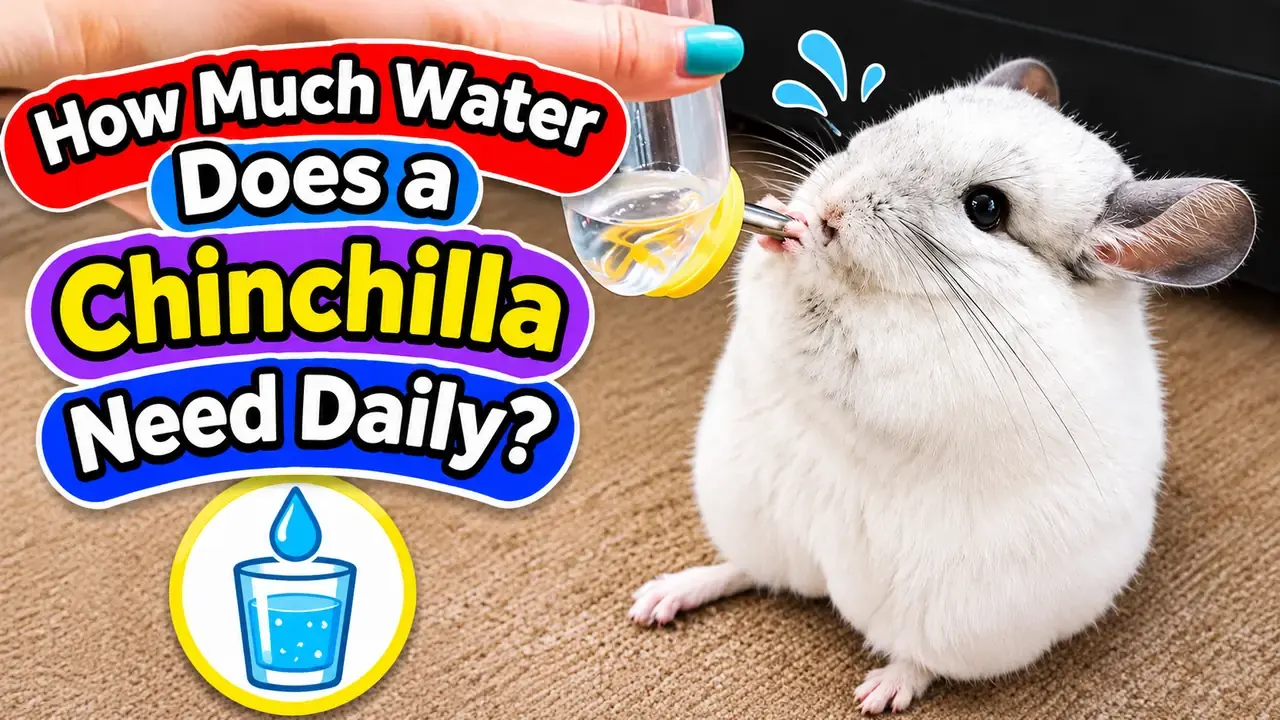
How Much Water Does a Chinchilla Need Daily? Intake, Bottles and Warning Signs
“Chinchillas and water don’t mix” is one of the most repeated lines in chinchilla care, and it causes real confusion. It’s true for their fur, which should never get soaked, but every chinchilla still needs fresh drinking water around the clock.
So how much is normal? Most healthy adult chinchillas drink roughly 1 to 2 ounces (about 30 to 60 ml) a day. Some drink a little less, some a little more, and that range shifts with the weather, their diet and how active they are.
The Quick Answer
| Question | Answer |
|---|---|
| Typical daily intake | About 1 to 2 oz (30 to 60 ml) for an adult |
| How often to refresh | Every day |
| Best container | A glass or chew-proof sipper bottle, or a heavy bowl |
| Tap or filtered? | Clean tap water is fine where it’s safe for people |
| When to worry | A sudden drop or a big jump in drinking, plus other symptoms |
Why Chinchillas Drink Less Than You’d Expect
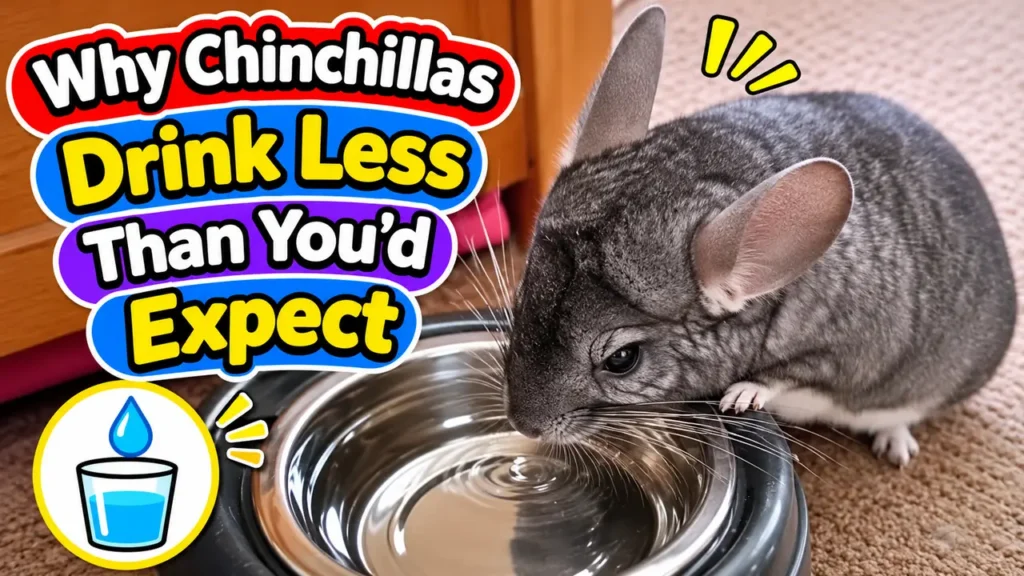
Chinchillas come from dry, rocky mountain slopes, and their bodies are very good at holding on to water. Research comparing small South American rodents found chinchillas drank noticeably less than guinea pigs or degus.
That doesn’t make water optional, though. Their main food is dry hay, so almost all of their fluid has to come from the bottle or bowl, and too little water has been linked to problems like constipation and bladder stones.
What Changes How Much a Chinchilla Drinks
- Room temperature: Warmer rooms mean more drinking, which is one more reason to keep things cool.
- Activity level: A chin that zooms around at night will usually drink more, and most of that happens after dark when they run around at night.
- Diet: Chinchillas eating mostly hay and pellets drink more than those getting fresh greens with extra moisture.
- Size and age: Bigger adults generally drink more than smaller or younger chins.
- Nursing: Mothers feeding kits need noticeably more water.
Water Bottle or Bowl?
Most owners use a bottle, but it isn’t the only option. Interestingly, the same research found chinchillas preferred drinking from open dishes when given the choice.
| Feature | Sipper Bottle | Heavy Bowl |
|---|---|---|
| Stays clean | Yes, very little gets in | Can collect hay, dust and droppings |
| Spill risk | Low | Higher, which can dampen bedding |
| Easy to measure | Yes, just read the level | Harder to track |
| Comfort | Fine for most chins | Easier for chins with sore teeth |
| Main risk | Spout can jam or leak | Water gets dirty fast |
If you go with a bottle, choose glass or a chew guard, since chinchillas will gnaw through soft plastic. Mount it where the spout sits at a comfortable height, and keep a spare in case one starts leaking or sticks.
How to Tell If Your Chinchilla Is Drinking Enough
- Fill the bottle to the same mark at the same time each day.
- Put a small strip of tape on the side to note the level.
- Check the level again 24 hours later and jot down the difference.
- Repeat for a week to learn what’s normal for your chin.
- Tap the spout daily so a stuck ball bearing doesn’t fool you.
Watch for leaks while you track. A dripping bottle can look like heavy drinking and leave the bedding wet at the same time.
[Add your own note: how much your own chinchilla tends to drink in a day, or the bottle setup that works for you.]
Signs Your Chinchilla Isn’t Drinking Enough
- Darker, stronger-smelling urine
- Fewer droppings, or droppings that are small, hard and dry
- Low energy or less interest in play
- Eating less than usual
- Sunken-looking eyes
Any of these alongside a full bottle deserves a closer look. Check the spout first, then call an exotic vet if your chinchilla still isn’t drinking.
A sudden big increase in drinking is worth mentioning to your vet too. It can be harmless on a hot day, but if it keeps up, it can point to an underlying health issue.
Keeping the Water Clean

Change the water every day, even if the bottle still looks full. Scrub the bottle and spout a few times a week with hot water and a bottle brush, rinsing well so no soap is left behind.
Skip vitamin drops and flavorings. They can encourage bacteria and may put a chinchilla off drinking, and a good hay and pellet diet already covers their needs.
The Fur Exception
Drinking water is essential, but a wet coat is a different matter. Chinchilla fur is so dense that it can stay damp for a very long time, which raises the risk of skin problems, so they stay clean by choosing to roll in dust instead of bathing.
If your chin ever gets wet by accident, pat it with a towel and keep it in a warm, draft-free spot until it’s completely dry. A hairdryer on high heat is never a safe shortcut.
Water Needs Through the Seasons and Life Stages
Young chinchillas drink more as they move from milk to solid food. Nursing mothers need noticeably more water, so check their bottle more often.
In summer, drinking tends to rise along with the room temperature. That’s a good reminder to keep things cool, since chinchillas can’t sweat away heat, as explained in our guide on what temperature is too hot for a chinchilla.
Setting Up the Water Bottle
- Choose a glass bottle with a metal spout or a chew guard.
- Mount it on the outside of the cage with only the spout poking through.
- Set the spout at a height your chinchilla can reach while standing comfortably.
- Keep it away from the hay rack and the main pee corner so it stays clean.
- After hanging it, watch for a few minutes to check for drips.
Some new chins take a moment to figure a bottle out. Tap the spout gently so a drop appears, and stay until you see them drink.
Water and Diet Work Together
Chinchillas eating mostly dry hay rely heavily on their water. That’s normal and healthy, and it’s one reason a daily water check matters as much as the food itself, as our daily feeding guide explains.
Drinking habits show up in the droppings too. Small, dry pellets can mean a chinchilla isn’t drinking enough, so compare with our guide to healthy chinchilla poop, and make the bottle part of your daily cleaning routine.
In Short
Offer fresh water every day, expect around 1 to 2 ounces of drinking, and pay attention when that number changes. Water is one of the simplest things to get right, and one of the easiest early warning signs to watch.