What Does a Chinchilla Look Like?
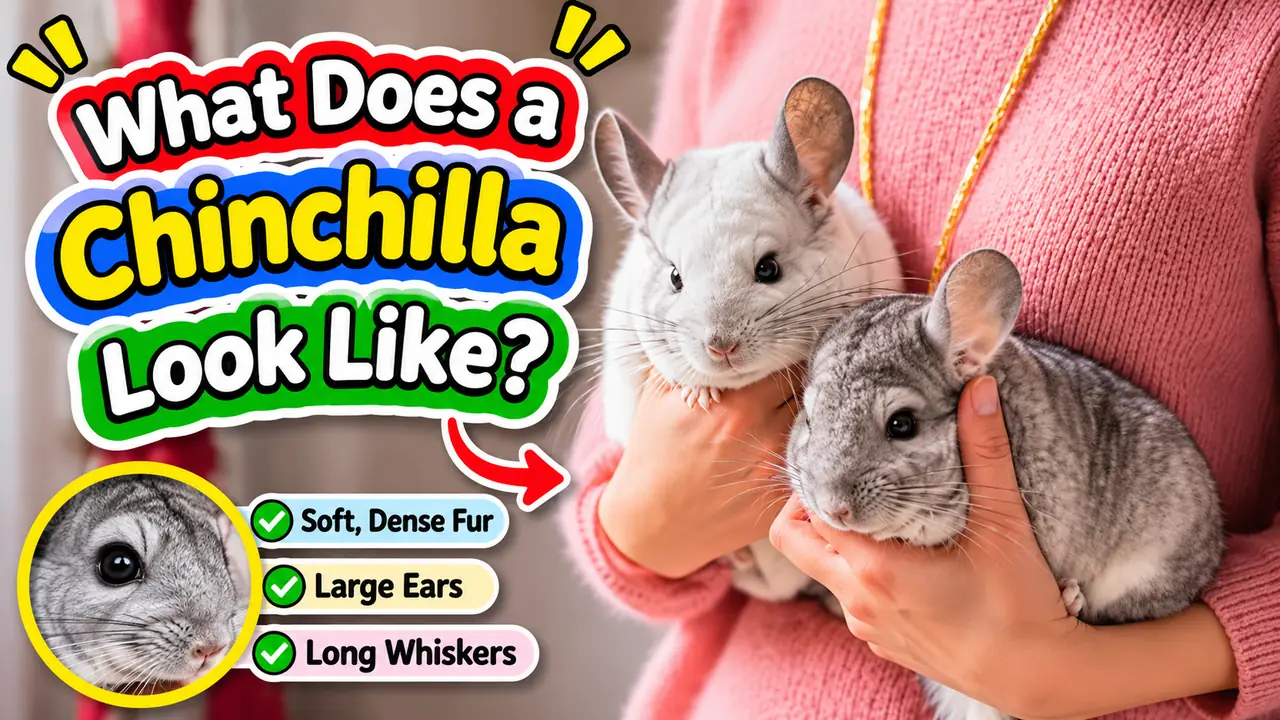
Imagine a rabbit’s ears on a round, fluffy body, then add a squirrel’s bushy tail and a fan of very long whiskers. That’s pretty close to a chinchilla: a compact rodent from the Andes with big dark eyes and some of the softest fur on the planet.
Photos rarely do them justice, though. Here’s a head-to-tail look at what makes a chinchilla look the way it does, and what each feature tells you about its health.
The Overall Shape
Chinchillas have a rounded, stocky body with short front legs and much longer, stronger back legs. When one sits upright, it looks a bit like a fluffy pear wearing oversized ears.
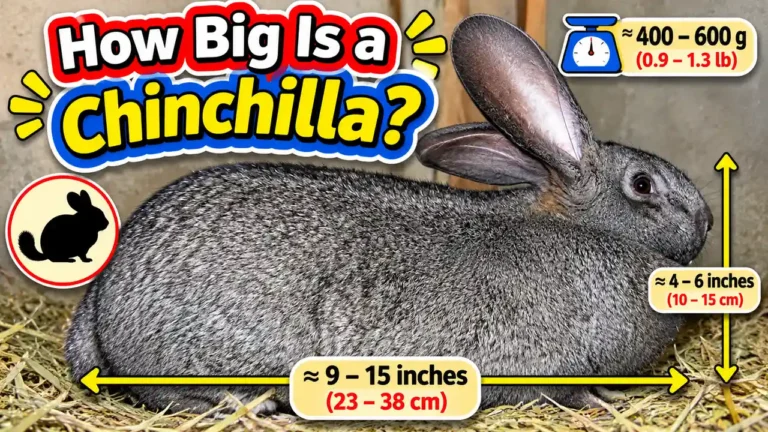
Most adults measure about 9 to 14 inches from nose to rump, with the tail adding a few more inches. Much of that bulk is fur, so the body underneath is smaller and lighter than you’d guess.
The Face
Ears
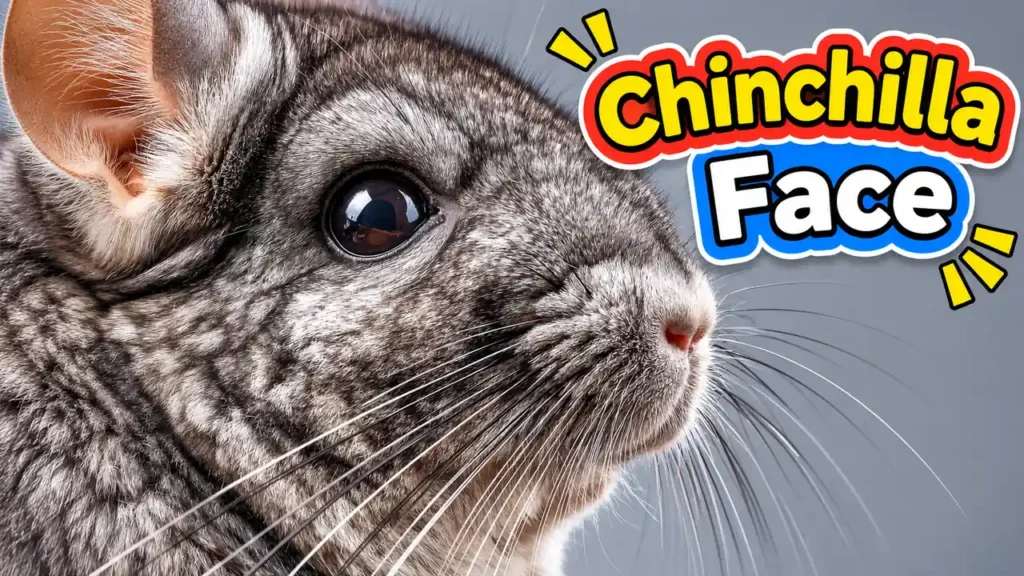
Large, rounded and only lightly furred, a chinchilla’s ears can look almost too big for its head. They’re thin enough to show tiny blood vessels, and they help release body heat, so bright red ears are an early warning sign of overheating.
Eyes
The eyes are large, round and usually dark, set toward the sides of the head so a chinchilla can watch for danger from many angles. A few color varieties, such as some beiges, have pink or ruby eyes instead.
Whiskers
Long whiskers spread out from both sides of the nose, often reaching about as wide as the body. Chinchillas rely on them to feel their way through tight spaces and dim light.
Teeth
This is the detail that surprises most new owners: healthy chinchilla front teeth are orange. The color comes from minerals in the enamel, and pale or white incisors can point to a diet problem worth raising with a vet.
A chinchilla has 20 teeth in total, four incisors at the front and 16 cheek teeth for grinding. Every one of them keeps growing for life.
The Fur
Chinchilla fur is the densest of any land animal, with up to about 60 hairs growing from a single follicle. The result is a coat so thick it feels more like a cloud than an animal.
That density is the reason they can’t have water baths and instead roll in dust to stay clean. It also helps them escape predators, because a grabbed chinchilla can release a clump of fur, a defense known as fur slip.
A healthy coat looks plush and even. Greasy, clumped, patchy or chewed fur usually points to a care issue such as too few dust baths, high humidity or stress.
Legs and Feet
The front paws are small and nimble, made for holding food while the chinchilla sits up to eat. If yours likes to stand on its hind legs, you’ve already seen how much weight those back legs can carry.
Those powerful hind legs are exactly why chinchillas can jump so high. Soft foot pads grip rocks and wooden ledges well, which is one reason solid shelves suit them better than wire.
The Tail
The tail is long and bushy, with coarser hair than the rest of the coat, and usually measures around 3 to 6 inches. It acts as a counterbalance during big leaps and quick turns.
Treat it gently. The tail is more fragile than it looks, and grabbing it the wrong way can cause an injury.
Chinchilla Colors
Wild chinchillas are blue-gray on top with a white belly, a look now called standard gray. Breeders have since developed many color mutations, and these are the ones you’ll come across most:
| Color | What It Looks Like |
|---|---|
| Standard gray | Blue-gray back fading to lighter sides, with a bright white belly |
| White | Mostly white, sometimes with gray patches, usually with dark eyes |
| Beige | Warm tan coat and white belly, often with pinkish ears and ruby eyes |
| Black velvet | Very dark head and back, gray sides and a white belly |
| Ebony | Deep charcoal to nearly black, often including the belly |
| Violet | Soft lavender-gray coat with a white belly |
| Sapphire | Pale, powdery blue-gray with a white belly |
| Mosaic | White mixed with patches or flecks of gray |
For pet owners, color is purely cosmetic. A sapphire needs exactly the same care as a standard gray.
Long-Tailed vs Short-Tailed Chinchillas

There are two wild species. The long-tailed chinchilla is slimmer, with bigger ears and a longer tail, while the short-tailed chinchilla is stockier, with smaller ears and a thicker neck.
Pet chinchillas descend mainly from the long-tailed species. Both are now rare in the wild after years of hunting for their fur.
What a Healthy Chinchilla Looks Like
- Bright, clear eyes with no crust or discharge
- Clean, dry fur around the mouth and chin
- Orange front teeth that meet evenly
- A thick, even coat without bald spots
- Pale pink ears in a cool room, not bright red
- Alert, curious behavior and smooth, steady movement
[Add your own note: your own chinchilla’s color and the feature visitors always notice first.]
How a Chinchilla’s Looks Change With Age
Kits arrive looking like miniature adults, fully furred with their eyes open. Their heads look a little large for their bodies at first, and the coat can seem fluffier and less even.
Over the first year, they fill out into the rounded adult shape described above. Seniors may develop a slightly thinner coat or a bonier feel along the back, so it helps to know how big chinchillas get and what healthy weight ranges look like.
Chinchilla vs Similar-Looking Pets
| Feature | Chinchilla | Rabbit | Guinea Pig |
|---|---|---|---|
| Ears | Large and rounded | Long, upright or lopped | Small and petal-shaped |
| Tail | Long and bushy | Short and fluffy | No visible tail |
| Fur | Ultra-dense and very soft | Soft but much thinner | Coarser, varies by breed |
| Legs | Short front legs, powerful back legs | Long back legs | Short legs all round |
| Movement | Big vertical leaps | Hops and bounds | Scurries and trots |
Chinchillas also get mixed up with degus now and then. Degus are smaller and slimmer, with a thin tail that ends in a little tuft.
What Their Body Tells You About Their Needs
That dense coat is the reason heat is so dangerous, and why their room has to stay cool. Our guide on what temperature is too hot for a chinchilla covers the safe range.
Those ever-growing orange teeth explain their need for hay and safe wood to chew. And the powerful hind legs are why a tall cage beats a wide one, as explained in our cage size guide.
In a Nutshell
If someone asks you what a chinchilla looks like, here’s the short version. It’s a round, cloud-soft rodent with big ears, long whiskers, orange teeth and a bushy little squirrel tail.